
How Supplement Absorption and Bioavailability Affect Nutrient Availability
Taking a vitamin or mineral supplement does not automatically mean the body will use every milligram listed on the label.
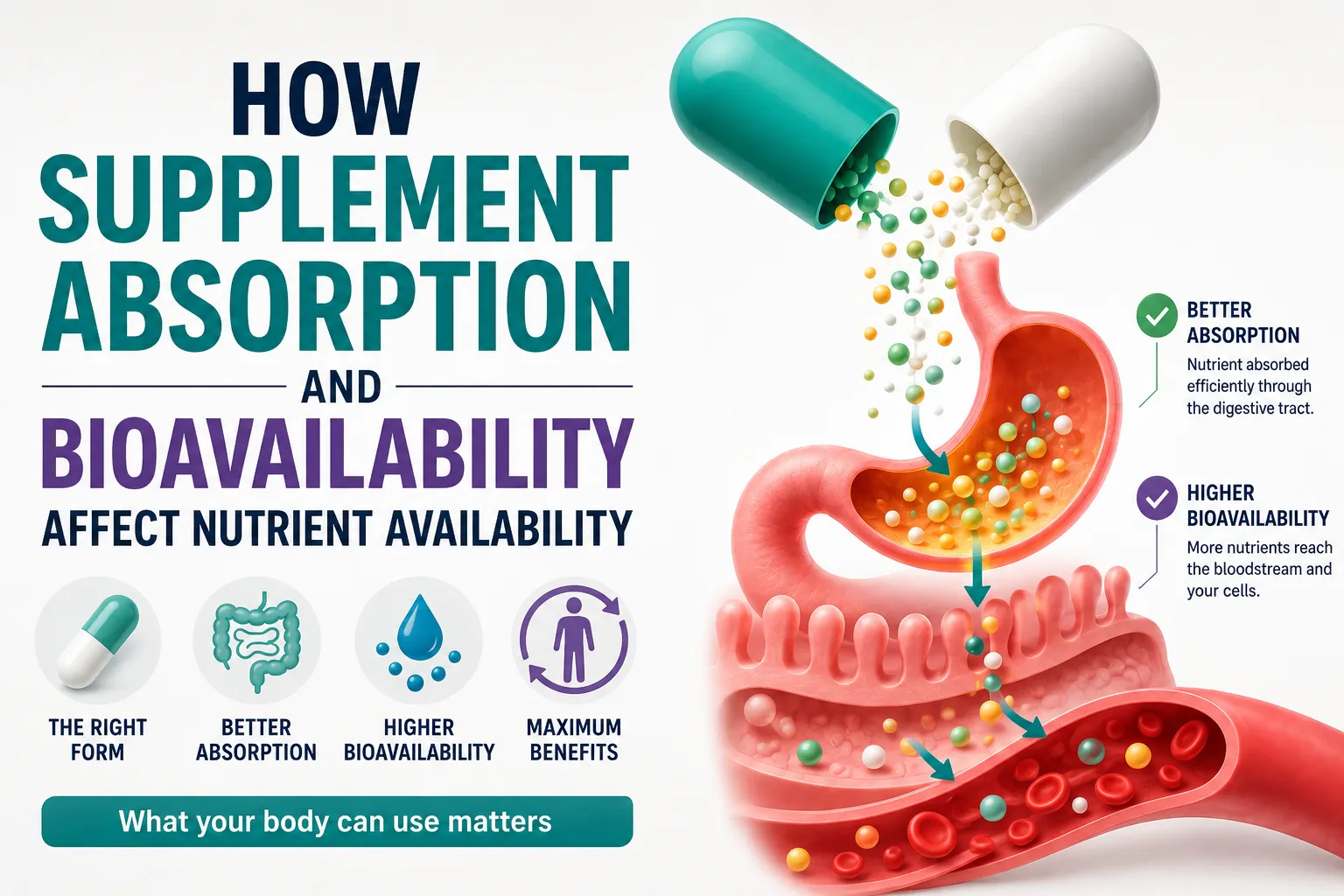
Before a nutrient can contribute to the body’s functions, it generally has to be released from the supplement, dissolve, survive the digestive process, cross the intestinal lining and become available to tissues. The amount that ultimately becomes available is influenced by the nutrient’s chemical form, the dose, what is eaten with it, digestive conditions and interactions with other nutrients or medicines.
This is where two important concepts—absorption and bioavailability—become useful.
Understanding the difference can explain why two supplements containing the same nutrient may not necessarily have identical effects and why the way a supplement is taken can sometimes matter.
What Is Supplement Absorption?
Absorption refers to the movement of a nutrient from the digestive tract into the body’s circulation or, for some nutrients, into the lymphatic system before entering circulation.
For an oral supplement, the process can involve several stages:
Supplement → Digestion and dissolution → Intestinal absorption → Circulation → Tissue use
If a nutrient is poorly absorbed, less of the amount consumed may become available to the body.
However, absorption is only one part of the story.
What Is Bioavailability?
Bioavailability broadly describes the proportion of a substance that becomes available for use by the body after it has been consumed.
For nutrients, this concept can be more complicated than simply asking how much enters the bloodstream.
A nutrient may be absorbed but then undergo metabolism or other processes that influence how much is ultimately available to tissues.
That means:
The amount on the supplement label is not necessarily the same as the amount the body can use.
This does not mean supplement labels are misleading. It means that nutrition involves biological processes between swallowing a product and the nutrient reaching its intended destination.
Absorption and Bioavailability Are Related but Different
The terms are sometimes used interchangeably, but they describe different parts of the process.
Absorption focuses primarily on how much of a substance crosses from the digestive system into the body.
Bioavailability considers the amount that becomes available for physiological use after absorption and related processes.
A nutrient can therefore have good absorption but still have its overall availability affected by metabolism, interactions or other biological factors.
Why the Chemical Form of a Nutrient Matters
The form of a nutrient can affect how it behaves in the digestive tract.
Minerals provide some of the clearest examples.
Calcium supplements, for instance, commonly contain either calcium carbonate or calcium citrate. The two forms behave differently under certain digestive conditions. Calcium carbonate is absorbed best when taken with food, while calcium citrate can be absorbed well with or without food.
This illustrates an important principle:
The nutrient name alone does not tell the whole story.
The chemical form used in a supplement can influence how the body handles it.
Different Forms Can Have Different Absorption Characteristics
The same general principle applies to other nutrients.
For example, the body handles different forms of vitamins and minerals through different pathways.
Vitamin D supplements commonly contain vitamin D2 or D3. Both can raise blood levels of vitamin D, but vitamin D3 generally raises 25-hydroxyvitamin D levels more effectively and maintains higher levels for longer than vitamin D2.
That does not mean one form is universally appropriate for everyone. It demonstrates why the form of a nutrient deserves attention when evaluating a supplement.
For broader context on how different vitamins function and the forms in which they are commonly encountered, see the complete guide to vitamins and their roles.
Food Can Change Nutrient Absorption
What you eat with a supplement can sometimes influence how well particular nutrients are absorbed.
This is particularly relevant for fat-soluble vitamins.
Vitamins A, D, E and K are fat-soluble, meaning dietary fat plays a role in their absorption.
The practical implication is that some supplements containing these vitamins may be better absorbed when taken with a meal that contains some fat.
This does not mean a supplement should always be taken with a large or high-fat meal. The appropriate instructions depend on the specific product.
Water-Soluble and Fat-Soluble Vitamins Behave Differently
Vitamins are often divided into two broad groups.
Water-Soluble Vitamins
These include:
- Vitamin C
- Thiamin
- Riboflavin
- Niacin
- Vitamin B6
- Folate
- Vitamin B12
- Biotin
- Pantothenic acid
They generally dissolve in water and are handled differently from fat-soluble vitamins.
Fat-Soluble Vitamins
These include:
- Vitamin A
- Vitamin D
- Vitamin E
- Vitamin K
Because they depend on processes involved in fat digestion and absorption, factors affecting fat digestion can influence their availability.
This is one reason supplement instructions can vary considerably from one nutrient to another.
Dose Can Affect Absorption
More is not necessarily better.
Some nutrients are absorbed less efficiently when consumed in large amounts at one time.
Calcium provides a useful example. Calcium is absorbed best when taken in amounts of 500 mg or less at one time. Someone taking 1,000 mg of supplemental calcium per day may therefore benefit from dividing it into smaller doses rather than taking the entire amount simultaneously.
The appropriate strategy depends on the nutrient and individual circumstances.
Taking a larger dose simply because a smaller dose is absorbed less efficiently can create other problems, including excessive intake.
The Digestive System Plays a Major Role
The gastrointestinal tract is not simply a passive tube through which supplements travel.
Digestion involves:
- Stomach acid
- Digestive enzymes
- Bile
- Intestinal movement
- Microorganisms
- Transport proteins
- The intestinal lining
Changes in any of these processes can potentially affect nutrient availability.
For example, stomach acidity can influence the solubility and absorption of certain nutrients.
Stomach Acid Can Matter
Some nutrients depend on an appropriate digestive environment to dissolve or become available for absorption.
Calcium carbonate illustrates this principle. People with low stomach acid may absorb calcium carbonate less effectively unless they take it with a meal. Calcium citrate is less dependent on stomach acid for absorption.
This is one reason the same supplement may not behave identically in every person.
Nutrient Interactions Can Change Absorption
Nutrients do not always operate independently.
Some can compete for absorption or influence how another nutrient is handled.
One well-known example involves iron and calcium.
Calcium can interfere with iron absorption, so taking iron and calcium supplements at different times may help avoid this interaction. The specific timing should depend on individual nutritional needs and professional guidance where appropriate.
These relationships are part of the broader topic of supplement interactions, which includes interactions among supplements, nutrients and medicines.
This does not mean calcium and iron should never be consumed together in food. Rather, people taking concentrated supplements may need to consider timing depending on their individual nutritional needs.
Vitamin C and Iron
The relationship between vitamin C and iron provides an example of an interaction that can work in the opposite direction.
Vitamin C can improve the absorption of nonheme iron, the form of iron found primarily in plant foods and many supplements.
Taking an iron supplement with a beverage containing vitamin C, such as orange juice, can increase iron absorption.
This is one reason nutrition advice sometimes focuses not just on how much of a nutrient is consumed, but also on what accompanies it.
Why Iron Absorption Deserves Special Attention
Iron absorption is particularly complex.
The body regulates iron absorption according to its needs, and the form of iron also matters.
Heme iron, found in animal foods, is generally absorbed differently from nonheme iron, found in plant foods and supplements.
Factors that can affect nonheme iron absorption include:
- Vitamin C
- Calcium
- Certain beverages
- Other components of the diet
- The body’s iron status
Some medications can also influence nutrient absorption.
For people taking iron because of a diagnosed deficiency, the best timing and formulation should be discussed with a healthcare professional.
Medications Can Affect Nutrient Availability
Supplements and medicines can interact in both directions.
Some medications can affect how nutrients are absorbed or used, while certain supplements can interfere with medication absorption or effectiveness.
For example, medicines that reduce stomach acid can affect the absorption of some nutrients, including nonheme iron.
This makes medication history important when evaluating supplement use.
Supplements Can Also Affect Medicines
The interaction can work in the opposite direction.
Some dietary supplements can alter the absorption, metabolism or excretion of medicines, potentially making a medication more or less effective.
This is particularly important for people taking prescription medicines with a narrow therapeutic range or medications that are highly sensitive to interactions.
Anyone taking regular medication should check with a doctor or pharmacist before adding a new supplement.
Why Timing Matters for Some Supplements
There is no universal “best time” to take every supplement.
For some nutrients, timing makes relatively little difference.
For others, taking a supplement with food, away from another nutrient or at a particular interval from medication can matter.
The right timing depends on:
- The nutrient
- The formulation
- The dose
- Other supplements
- Medications
- Individual digestive conditions
- The product’s instructions
The time of day does not usually matter for supplements generally, but some supplements can interfere with medications or have absorption differences depending on how they are taken.
Empty Stomach or With Food?
The answer depends on the supplement.
Some products are designed to be taken with food, while others may be absorbed adequately without it.
For example, calcium carbonate is absorbed best with food, whereas calcium citrate can be taken with or without food.
Rather than applying a single rule to every supplement, follow the product instructions and consider advice from a qualified healthcare professional when necessary.
Why “More Absorption” Is Not Always Better
It can be tempting to think that maximizing absorption is always the goal.
But the body needs nutrients within appropriate ranges.
Excessive intake of some vitamins and minerals can cause adverse effects.
For this reason, the objective should not simply be:
“Get as much of the supplement into the bloodstream as possible.”
A better goal is:
Provide an appropriate amount of a needed nutrient in a form and manner that supports normal physiological requirements.
This distinction is especially important with high-dose supplements.
Bioavailability Depends on the Person Too
Two people taking the same supplement can potentially experience different levels of nutrient availability.
Differences may involve:
- Age
- Digestive health
- Nutritional status
- Body composition
- Genetics
- Kidney or liver function
- Medications
- Existing nutrient deficiencies
- Other dietary factors
This is why supplement research often reports averages rather than guaranteeing identical results for every individual.
Food Sources and Supplements Are Not Always Equivalent
A supplement can provide a concentrated amount of a specific nutrient.
Food, however, contains a complex mixture of:
- Vitamins
- Minerals
- Protein
- Fiber
- Fat
- Carbohydrates
- Water
- Bioactive compounds
These components can interact during digestion.
For that reason, replacing a varied diet with a collection of supplements is generally not considered equivalent to eating a balanced diet.
Why Supplement Labels Need Careful Reading
A supplement label can contain several pieces of information that are easy to overlook.
Pay attention to:
- Serving size
- Amount per serving
- Chemical form
- Other ingredients
- Recommended use
- Daily value percentages
- Warnings
- Allergen information
The amount listed may also refer to a particular compound rather than the amount of elemental nutrient.
Calcium is a good example.
A calcium supplement may contain calcium carbonate, but the important nutritional quantity is the amount of elemental calcium, not simply the total weight of the compound.
For a practical guide to interpreting this information, see how to read supplement labels correctly.
What “High Potency” Really Means
Marketing terms such as “high potency,” “maximum strength” or “mega dose” can make a supplement appear more effective.
But a larger dose does not automatically mean greater nutritional benefit.
If the body does not need additional amounts, increasing intake may provide little additional value and can sometimes increase the risk of adverse effects.
The right dose depends on nutritional requirements and individual circumstances.
Why Formulation Matters
Two supplements containing the same nutrient may use different formulations.
Differences can involve:
- Chemical form
- Tablet versus capsule
- Powder versus liquid
- Added fats
- Coatings
- Other ingredients
- Release characteristics
These factors can influence how the product dissolves and how the nutrient becomes available.
This is one reason it is difficult to compare supplements based solely on the number printed on the front of a bottle.
Probiotics Are a Different Example
Bioavailability becomes more complicated with supplements containing living microorganisms.
For probiotics, questions include:
- Whether organisms survive storage
- Whether they survive stomach acid
- Whether they reach the intestine
- Whether the strain remains viable
- Whether the product contains the amount stated on the label
This illustrates how “absorption” is not the appropriate concept for every supplement.
Different ingredients have different biological pathways.
Herbal Supplements Add Another Layer of Complexity
Botanical supplements can contain multiple active compounds rather than a single defined nutrient.
Their effects may depend on:
- Plant species
- Plant part
- Extraction method
- Standardization
- Dose
- Other ingredients
Some botanicals can also interact with medications.
“Natural” therefore does not automatically mean predictable or risk-free.
Why Product Quality Matters
Absorption and bioavailability can only be considered if the product actually contains what the label says it contains.
Quality concerns can include:
- Incorrect ingredient amounts
- Contamination
- Poor storage
- Degradation
- Inaccurate labeling
Consumers can reduce some risks by choosing reputable products and looking for credible quality-control information.
However, certification does not mean a supplement is automatically effective or appropriate for an individual.
Supplements Are Not Automatically FDA-Approved
In the United States, dietary supplements are regulated differently from medicines.
Dietary supplements are regulated as a category of food rather than drugs and generally are not approved for safety and effectiveness before being marketed in the same way prescription medicines are.
That distinction matters when interpreting claims such as:
“FDA approved.”
Consumers should be cautious about marketing language that implies a supplement has undergone the same premarket approval process as a prescription drug.
How to Improve Nutrient Availability Safely
There are several practical principles that can help consumers use supplements more effectively.
Follow the Label
Take the product according to its directions unless a healthcare professional has advised otherwise.
Consider Food Instructions
If the label says to take the supplement with food, there is usually a reason.
Check Nutrient Interactions
Some nutrients can interfere with each other’s absorption.
Review Medication Interactions
Ask a pharmacist or healthcare professional about potential interactions if you take medicines.
Avoid Unnecessary Megadoses
More is not automatically better.
Consider the Form
Different chemical forms can have different absorption characteristics.
Don’t Ignore the Diet
A varied diet remains the primary source of most nutrients for many people.
When Supplementation May Be Especially Relevant
Supplements can be useful when diet alone does not provide enough of a particular nutrient or when a healthcare professional recommends supplementation.
Examples can include situations involving:
- Documented nutrient deficiencies
- Certain dietary patterns
- Increased nutritional requirements
- Specific life stages
- Certain medical conditions
The appropriate supplement and dose depend on the situation.
A supplement should not be chosen solely because it is popular online.
Why Testing Can Matter
If someone suspects they have a nutrient deficiency, taking a large dose without knowing their status may not be the best approach.
Depending on the nutrient and circumstances, a healthcare professional may recommend dietary assessment, laboratory testing or other evaluation.
Testing can help distinguish between:
- A genuine deficiency
- An adequate nutrient status
- Excessive intake
- Symptoms caused by something unrelated to the nutrient
This can make supplementation more targeted.
Common Myths About Absorption
Myth: The More Expensive Supplement Is Always Better
Price does not automatically determine absorption or effectiveness.
A more expensive product may contain a different formulation, but higher cost alone is not evidence of better bioavailability.
Myth: Taking Supplements on an Empty Stomach Always Improves Absorption
Not necessarily.
Some nutrients are better absorbed with food, and certain supplements can cause stomach discomfort when taken without food.
Myth: All Forms of the Same Nutrient Work Identically
Different forms can have different absorption and biological characteristics.
Calcium carbonate and calcium citrate demonstrate this clearly.
Myth: If a Supplement Is Natural, Absorption and Safety Don’t Matter
Natural products can contain biologically active substances and can interact with medicines.
Myth: A High Dose Guarantees Better Results
High doses can be unnecessary and, for some nutrients, harmful.
The objective should be adequate intake rather than maximum intake.
Questions to Ask Before Buying a Supplement
Before purchasing a supplement, consider asking:
- Do I actually need this nutrient?
- What form of the nutrient does the product contain?
- How much of the actual nutrient is provided per serving?
- Should it be taken with food?
- Could another nutrient interfere with absorption?
- Could it interact with any medicines I take?
- Is the dose appropriate for me?
- Does the manufacturer provide credible quality information?
- Are the health claims supported by reliable evidence?
- Could I obtain enough of this nutrient through food instead?
These questions can help turn supplement shopping from a marketing exercise into a more informed decision.
Making Every Milligram Count
Supplement absorption and bioavailability explain why the number printed on a bottle is only one part of the nutritional picture.
The body’s ability to obtain and use a nutrient can depend on its chemical form, dose, food consumed alongside it, digestive conditions, interactions with other nutrients and medications, and individual differences. Calcium, iron and vitamin D provide useful examples of how these factors can influence what ultimately becomes available to the body.
For consumers, the practical lesson is not to chase the supplement with the biggest number or the most impressive marketing claims. It is to choose an appropriate nutrient when there is a genuine need, use a suitable formulation and dose, follow product directions, and check for interactions when medications or other supplements are involved.
A supplement can be a useful tool for meeting nutritional needs, but effective nutrition is about what the body can appropriately obtain and use—not simply what is swallowed.
Continue Reading
Similar Posts
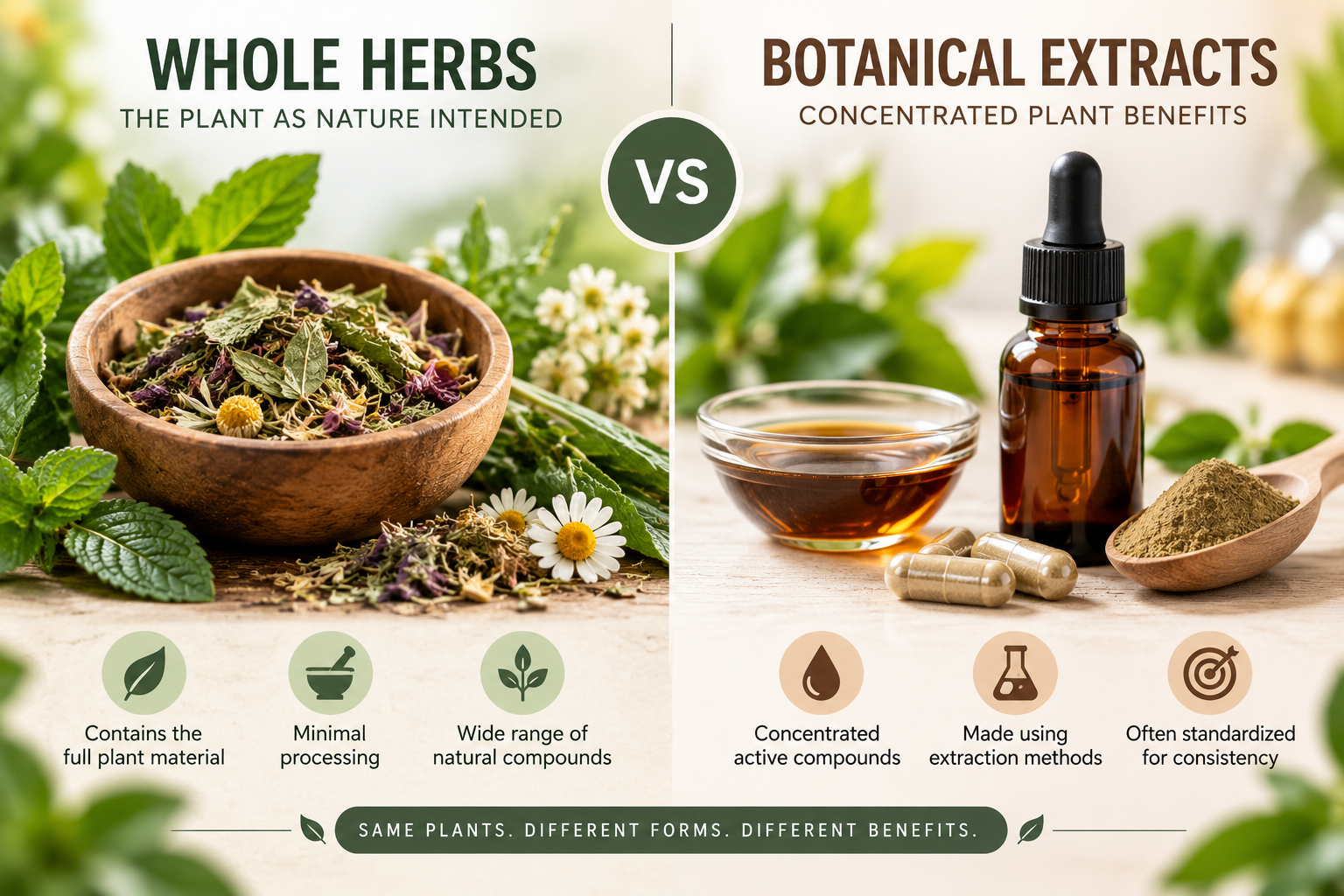
How Botanical Extracts Differ From Whole Herbs
Understanding how extracts differ from whole herbs can make it easier to interpret supplement labels, compare products, and evaluate claims about herbal ingredients.
Read article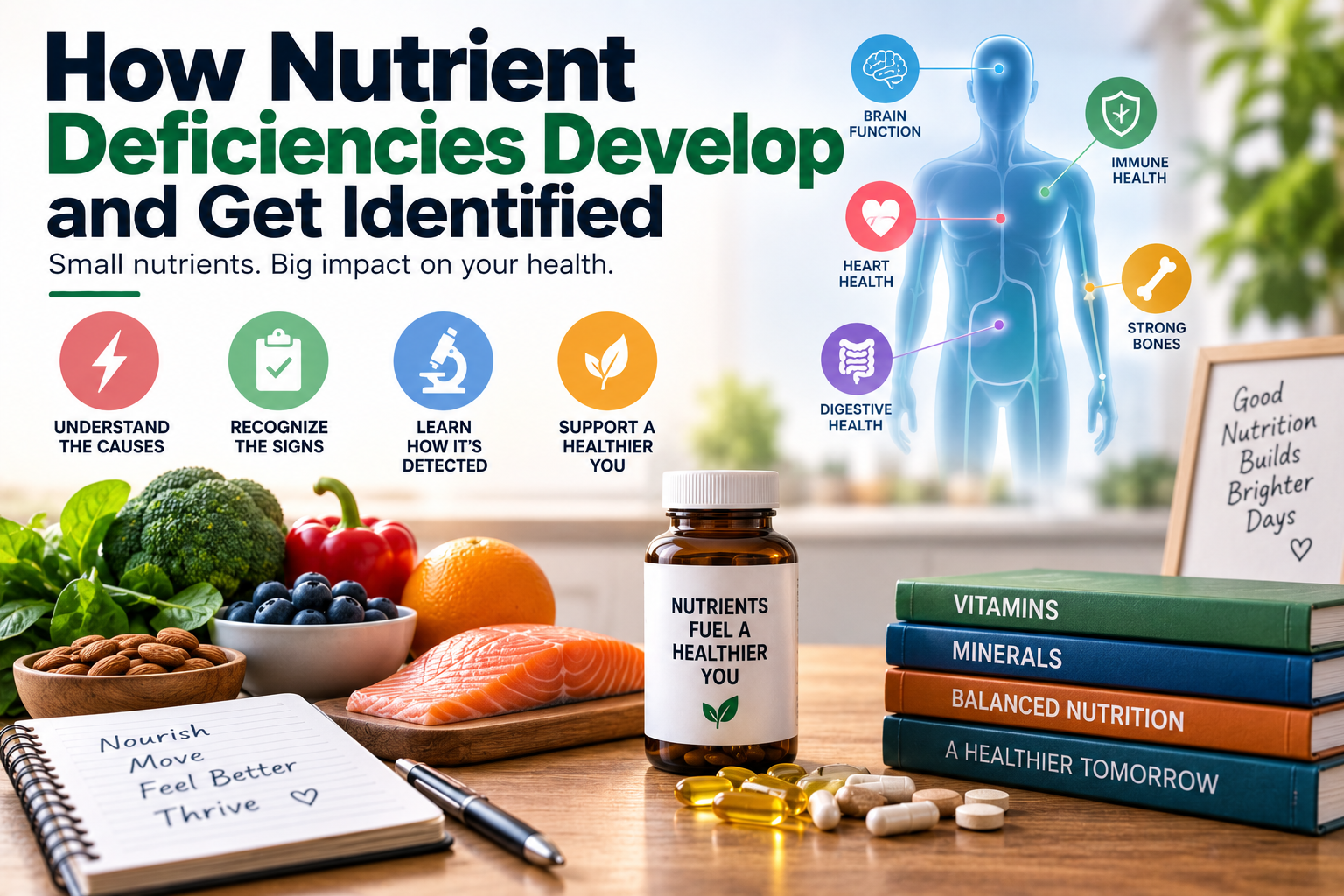
How Nutrient Deficiencies Develop and Get Identified
Understanding how nutrient deficiencies develop—and how healthcare professionals identify them—can make it easier to recognize potential problems before they become more serious.
Read article
What Is the Difference Between Water-Soluble and Fat-Soluble Vitamins
Understanding this basic distinction can make it easier to interpret nutrition information, evaluate supplements, and make informed decisions about dietary intake.
Read article

Join 10,000+ Readers Building Healthier Habits
Get actionable wellness tips every week plus our newest articles delivered straight to your inbox.