

**How Nutrient Deficiencies Develop Over Time
Nutrient deficiencies rarely appear overnight. In many cases, they develop gradually as the body receives too little of a particular vitamin or mineral, absorbs it poorly, uses more of it than usual, or loses it through illness or other circumstances.
Because the process can be slow, a person may not immediately recognize that their nutrient intake has become inadequate. Early changes can be subtle, while more significant deficiency can eventually interfere with normal body functions.
Understanding how deficiencies develop can make it easier to recognize potential risk factors and appreciate why a balanced diet, appropriate medical evaluation, and targeted treatment can matter.
What Is a Nutrient Deficiency?
A nutrient deficiency occurs when the body does not have enough of an essential nutrient to meet its physiological needs.
Essential nutrients include vitamins and minerals, along with other dietary components required for normal growth, metabolism, tissue maintenance, and other biological processes.
The body does not necessarily respond immediately when intake falls below ideal levels. Depending on the nutrient, it may draw on stored supplies or adjust how the nutrient is absorbed and used.
The time required for a deficiency to develop therefore varies considerably.
Some nutrients can be stored in significant amounts, while others have relatively limited reserves and need to be consumed regularly.
Deficiencies Can Begin With Small Changes
A deficiency may begin with a relatively modest change in nutrient intake.
For example, someone might gradually eat fewer foods containing a particular vitamin or mineral. If that pattern continues, their average intake may eventually become insufficient.
Other changes can contribute as well, including:
- Major changes in eating habits
- Restrictive diets
- Poor appetite
- Limited food variety
- Increased nutritional requirements
- Problems absorbing nutrients
- Certain illnesses
- Increased nutrient losses
- Long-term use of some medications
A single day of inadequate intake generally does not mean that a deficiency has developed. The concern is usually a sustained imbalance between what the body needs and what it receives or absorbs.
For a broader look at how dietary patterns supply essential nutrients, see the Complete Guide to Healthy Eating and Balanced Nutrition.
The Body Can Use Stored Nutrients
One reason deficiencies can take time to become apparent is that the body can store certain nutrients.
Fat-soluble vitamins, including vitamins A, D, E, and K, can be stored in body tissues. Some minerals and water-soluble vitamins can also have reserves, although storage capacity varies substantially.
When dietary intake decreases, these reserves may help maintain normal physiological functions for a period of time.
Eventually, however, continued inadequate intake or absorption can reduce those reserves.
The rate at which this happens depends on the nutrient, the individual’s nutritional status, their physiological needs, and other factors.
Different Nutrients Become Deficient at Different Rates
There is no universal timeline for nutrient deficiency.
A deficiency can develop relatively quickly for some nutrients under certain circumstances, while others may take much longer because the body has larger stores or more effective mechanisms for conserving them.
For example, vitamin B12 can be stored in substantial amounts, meaning inadequate intake does not necessarily produce deficiency immediately. By contrast, the body has relatively limited stores of some other nutrients.
This is one reason it is difficult to determine whether someone is deficient simply by looking at how long they have followed a particular eating pattern.
Why Diet Variety Matters
Eating a wide variety of foods can help reduce the risk of nutritional gaps.
Different foods provide different combinations of vitamins, minerals, protein, fats, carbohydrates, and other compounds. A highly repetitive diet can make it more difficult to consistently obtain all the nutrients the body requires.
A balanced dietary pattern does not mean that every meal needs to contain every nutrient. Rather, nutritional adequacy can be considered across the overall eating pattern.
Foods such as vegetables, fruits, whole grains, legumes, nuts, seeds, dairy or suitable alternatives, eggs, fish, meat, and other protein-rich foods can contribute different nutrients depending on the individual’s dietary preferences and circumstances.
How Vitamins Fit Into Nutritional Health
Vitamins are organic compounds that the body needs in relatively small quantities for numerous biological processes.
They participate in functions involving metabolism, immune activity, blood formation, nervous-system function, vision, tissue maintenance, and other processes.
The Complete Guide to Vitamins and Their Roles provides a broader explanation of individual vitamins and their functions.
Because different vitamins have different storage characteristics and physiological roles, their deficiencies can develop and present in different ways.
Minerals Are Essential Too
Minerals are another major category of essential nutrients.
Iron, calcium, magnesium, zinc, iodine, potassium, and several other minerals contribute to processes ranging from oxygen transport and bone maintenance to nerve signaling and muscle function.
Some minerals are needed in larger amounts, while others are required in much smaller quantities.
The Minerals Explained: Essential Nutrients Your Body Needs Every Day explores these nutrients and their roles in greater detail.
A diet that consistently provides too little of a particular mineral can eventually contribute to inadequate body stores.
Increased Nutrient Needs Can Change the Equation
Nutrient requirements are not identical for everyone.
Growth, pregnancy, breastfeeding, intense physical demands, recovery from illness, and other physiological circumstances can change nutritional requirements.
A dietary pattern that provides enough of a nutrient for one person may not necessarily meet the needs of another person in a different situation.
This does not mean that everyone needs supplements whenever their circumstances change. Instead, increased requirements are one factor that can influence whether a deficiency develops.
Poor Absorption Can Cause Deficiency
Nutrient deficiency is not always caused by inadequate dietary intake.
The digestive system must break down food, absorb nutrients, and transport them into the body. Conditions that interfere with digestion or absorption can reduce the amount of a nutrient that becomes available even when dietary intake appears adequate.
This is particularly important when evaluating persistent or unexplained deficiencies.
Someone may consume foods containing an essential nutrient but still develop low levels if their body cannot absorb or use the nutrient effectively.
Illness Can Affect Nutrient Status
Some medical conditions can alter nutrient requirements, absorption, metabolism, or losses.
Long-term gastrointestinal problems, certain chronic illnesses, and conditions affecting organs involved in nutrient processing can influence nutritional status.
This is one reason persistent symptoms should not automatically be attributed to a dietary deficiency.
Symptoms can have many possible causes, and determining whether a nutrient deficiency is present may require a medical history, physical assessment, and laboratory testing.
Medications Can Sometimes Affect Nutrient Levels
Some medications can influence nutrient status.
Depending on the medication and circumstances, this may occur by affecting absorption, metabolism, appetite, or nutrient losses.
This does not mean that people taking medication should automatically take additional supplements.
Supplementation can itself create problems when nutrients are consumed in excessive amounts or when supplements interact with medications. Anyone concerned about a possible medication-related deficiency can discuss the issue with a qualified healthcare professional.
Early Deficiency May Be Difficult to Recognize
One of the challenges with nutrient deficiencies is that early changes may not be obvious.
The body can sometimes compensate for declining nutrient availability before more noticeable effects appear. A person may therefore have an inadequate nutritional status without experiencing a dramatic symptom.
When symptoms eventually develop, they may also be nonspecific.
Fatigue, weakness, changes in concentration, changes in skin or hair, or other complaints can occur for many different reasons. Such symptoms cannot reliably identify a particular deficiency on their own.
How Deficiencies Are Identified
Healthcare professionals may use several types of information when evaluating suspected nutritional deficiencies.
These can include:
- Dietary history
- Medical history
- Physical examination
- Medication history
- Laboratory testing
- Relevant risk factors
- Symptoms and clinical findings
Laboratory tests can sometimes help determine whether a nutrient level is outside an expected range, although interpretation depends on the specific nutrient and the circumstances of the individual.
The process is discussed in greater detail in How Nutrient Deficiencies Develop and Get Identified.
Why Symptoms Alone Can Be Misleading
It can be tempting to search for a symptom and assume that it identifies a particular vitamin or mineral deficiency.
That approach can be misleading.
Many symptoms associated with nutrient deficiencies overlap with symptoms caused by sleep problems, infections, stress, medication effects, underlying medical conditions, inadequate overall food intake, and numerous other factors.
For that reason, symptoms are best viewed as part of a broader assessment rather than as definitive evidence of a deficiency.
Supplements Can Help in Specific Situations
Supplements can be useful when someone has a confirmed deficiency, has increased nutritional requirements, cannot obtain sufficient amounts through food, or has another clearly established reason for supplementation.
However, supplements are not a universal substitute for a varied diet.
Taking large quantities of vitamins or minerals without an identified need can also be harmful. Some nutrients can accumulate in the body, while excessive amounts of others can interfere with normal physiological processes.
The appropriate approach depends on the particular nutrient, dose, individual circumstances, and reason for supplementation.
Deficiency and Imbalance Are Not Always the Same
Nutritional health involves more than avoiding severe deficiencies.
A person’s overall dietary pattern determines the combination of nutrients they receive. Consistently consuming very little of certain foods can create nutritional gaps, while excessive reliance on supplements can produce unnecessarily high intake of particular nutrients.
The goal is generally to maintain adequate nutritional intake rather than simply maximizing nutrient consumption.
More is not automatically better when it comes to vitamins and minerals.
Preventing Deficiencies Over Time
Maintaining nutritional adequacy is usually a long-term process rather than something that can be achieved through a single meal or short-term dietary change.
Helpful strategies can include:
- Eating a varied diet.
- Including nutrient-rich foods regularly.
- Avoiding unnecessarily restrictive eating patterns.
- Paying attention to changing nutritional requirements.
- Addressing persistent digestive or health problems with a healthcare professional.
- Reviewing supplements and medications with an appropriate professional when necessary.
- Seeking evaluation when a deficiency is suspected rather than relying solely on symptoms.
Individual nutritional needs can differ, so prevention strategies may need to be adapted to a person’s circumstances.
The Gradual Nature of Nutritional Deficiency
Nutrient deficiencies are often the result of a process rather than a single event. A prolonged shortage of dietary intake, increased requirements, impaired absorption, illness, or other factors can gradually reduce the amount of a nutrient available to the body.
The body’s storage systems and regulatory mechanisms can delay noticeable effects, which means nutritional problems may develop before they become obvious.
Understanding that progression also explains why balanced nutrition matters over time. The objective is not to achieve perfect nutrition at every meal, but to consistently provide the body with the nutrients it needs while recognizing when individual circumstances may require closer attention.
Continue Reading
Similar Posts

What Does Herbal Supplement Standardization Mean?
Understanding what standardization actually means can help consumers interpret supplement labels and distinguish standardization from broader concepts such as quality control, purity, identity, and testing.
Read article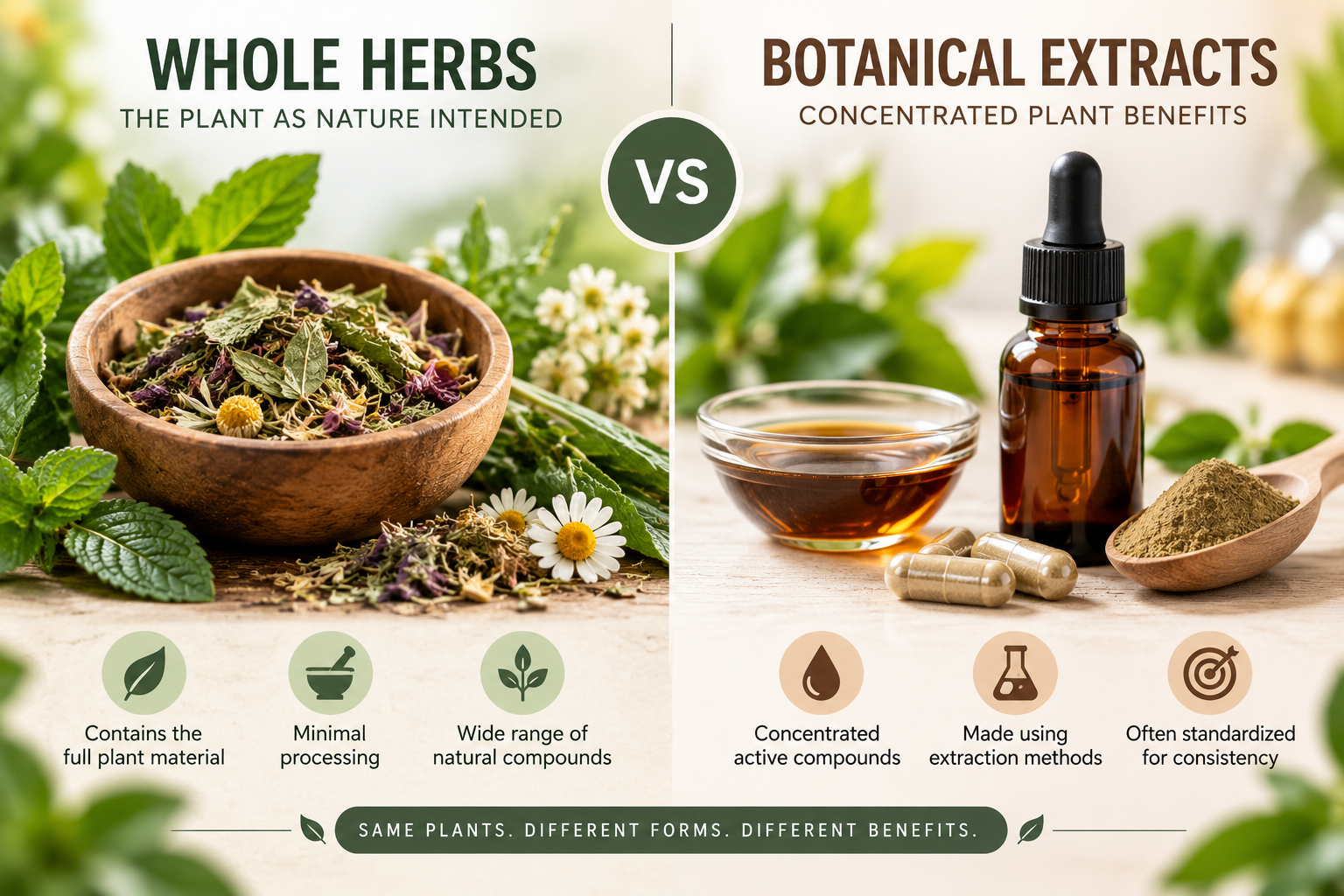
How Botanical Extracts Differ From Whole Herbs
Understanding how extracts differ from whole herbs can make it easier to interpret supplement labels, compare products, and evaluate claims about herbal ingredients.
Read article
How Nutrient Deficiencies Develop and Get Identified
Understanding how nutrient deficiencies develop—and how healthcare professionals identify them—can make it easier to recognize potential problems before they become more serious.
Read article

Join 10,000+ Readers Building Healthier Habits
Get actionable wellness tips every week plus our newest articles delivered straight to your inbox.