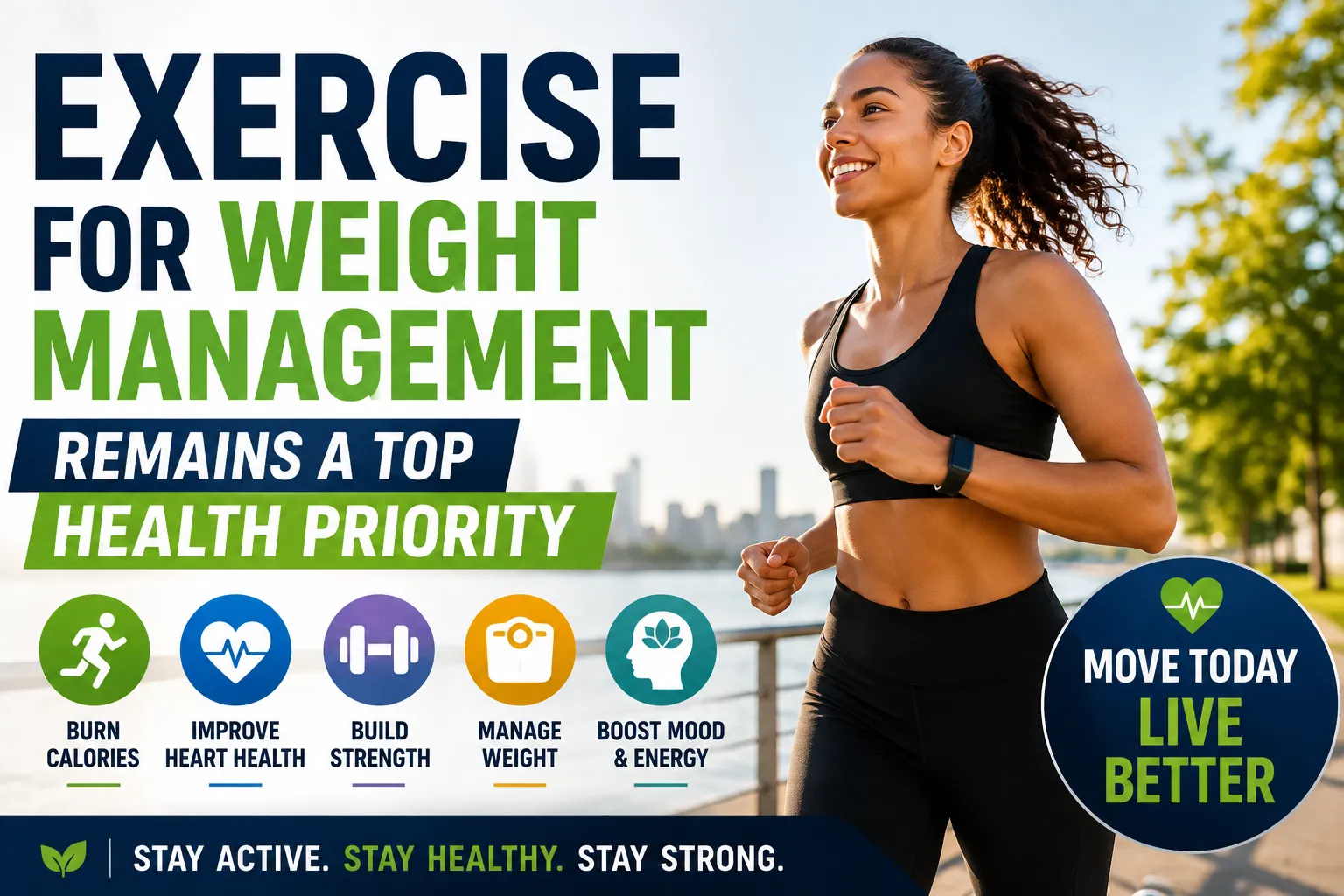

Exercise for Weight Management Remains a Top Health Priority
Regular physical activity continues to be recognized as one of the most effective strategies for maintaining a healthy weight and reducing the risk of chronic disease. As health organizations around the world emphasize preventive healthcare, exercise remains at the center of recommendations for long-term weight management, improved cardiovascular health, and overall well-being.
While nutrition plays a crucial role in weight control, experts consistently stress that combining a balanced diet with regular exercise provides the greatest opportunity for achieving and maintaining a healthy body weight. From walking and cycling to strength training and high-intensity workouts, nearly every form of movement can contribute to healthier outcomes when performed consistently.
For a broader framework covering nutrition, physical activity, sleep, stress, goals and other factors, see the complete guide to healthy weight management.
Why Exercise Matters for Weight Management
Weight management is influenced by a combination of factors, including diet, physical activity, genetics, sleep, stress, and overall lifestyle.
Exercise helps support a healthy weight by:
- Burning calories
- Increasing energy expenditure
- Preserving muscle mass
- Supporting metabolism
- Improving cardiovascular fitness
- Enhancing mental well-being
- Reducing sedentary behavior
- Promoting long-term healthy habits
Rather than serving as a quick solution, regular exercise is most effective when incorporated into a sustainable lifestyle.
Beyond the Number on the Scale
Health experts increasingly emphasize that exercise provides benefits extending far beyond weight loss.
Regular physical activity may contribute to:
- Improved heart health
- Stronger bones
- Better balance and coordination
- Increased muscle strength
- Enhanced flexibility
- Better sleep quality
- Improved mood
- Reduced stress
- Greater energy levels
- Improved overall quality of life
Even when body weight changes gradually, these health improvements can begin much sooner.
Recommended Levels of Physical Activity
Public health guidelines generally encourage adults to engage in regular physical activity throughout the week.
A balanced fitness routine often includes:
- Moderate aerobic exercise
- Vigorous cardiovascular activity
- Strength training
- Flexibility exercises
- Balance training
The exact amount and intensity should be appropriate for an individual’s age, health status, and fitness level.
Aerobic Exercise and Calorie Burning
Aerobic activities elevate the heart rate and are commonly included in weight management programs.
Popular examples include:
- Walking
- Jogging
- Running
- Cycling
- Swimming
- Dancing
- Rowing
- Hiking
These exercises help increase calorie expenditure while supporting cardiovascular fitness.
Strength Training Supports Healthy Weight
Resistance training plays an important role alongside cardiovascular exercise.
Strength-focused activities include:
- Weightlifting
- Bodyweight exercises
- Resistance bands
- Functional training
- Machine-based workouts
Building and maintaining muscle helps support physical function and contributes to overall metabolic health.
For people interested in how different forms of exercise may affect metabolic health, combining cardio and strength training may be better for diabetes prevention.
Consistency Is More Important Than Intensity
Many fitness professionals emphasize that long-term consistency often produces better results than occasional intense workouts.
Building sustainable habits may include:
- Scheduling regular exercise sessions
- Choosing enjoyable activities
- Gradually increasing intensity
- Setting realistic goals
- Tracking progress
- Staying active throughout the day
Small improvements maintained over time can have meaningful health benefits.
Daily Movement Counts
Exercise does not need to occur exclusively in a gym.
Everyday activities can contribute to an active lifestyle, including:
- Walking instead of driving short distances
- Taking the stairs
- Gardening
- Household chores
- Playing with children
- Recreational sports
- Standing more frequently during the workday
Increasing daily movement helps reduce sedentary time, which is associated with several health risks.
Nutrition and Exercise Work Together
Exercise is only one component of effective weight management.
Balanced nutrition supports physical activity by providing the energy and nutrients needed for recovery and overall health.
Healthy eating habits often include:
- Fruits and vegetables
- Whole grains
- Lean protein sources
- Healthy fats
- Adequate hydration
- Appropriate portion sizes
Combining nutritious eating with regular exercise offers the strongest foundation for long-term success.
Mental Health Benefits
Exercise also supports emotional well-being.
Regular physical activity has been associated with:
- Reduced stress
- Improved mood
- Better concentration
- Greater self-confidence
- Enhanced resilience
- Improved sleep quality
These psychological benefits may help individuals maintain healthy routines over time.
Common Barriers to Exercise
Many people face obstacles that make regular physical activity challenging.
Common barriers include:
- Limited time
- Busy work schedules
- Physical limitations
- Lack of motivation
- Weather conditions
- Limited access to facilities
- Financial constraints
Finding flexible and enjoyable forms of exercise can help overcome many of these challenges.
Technology and Fitness
Digital tools are making exercise more accessible than ever.
Popular technologies include:
- Fitness trackers
- Smartwatches
- Mobile fitness apps
- Online workout classes
- Virtual coaching
- Heart rate monitors
These tools can help individuals monitor activity, set goals, and maintain motivation.
Exercise Across Different Life Stages
Physical activity remains valuable throughout life.
Children and Teenagers
Regular activity supports healthy growth, bone development, and lifelong fitness habits.
Adults
Exercise helps maintain weight, reduce chronic disease risk, and improve overall physical performance.
Older Adults
Strength, balance, and flexibility exercises can support mobility, independence, and fall prevention.
Fitness recommendations should always be tailored to individual abilities and health conditions.
Setting Realistic Goals
Sustainable weight management is typically achieved through gradual progress rather than rapid changes.
Helpful goals include:
- Increasing weekly activity
- Improving endurance
- Building strength
- Enhancing flexibility
- Establishing consistent routines
Focusing on long-term habits often leads to better outcomes than short-term challenges.
Looking Ahead
Interest in preventive health continues to grow, and exercise is expected to remain a cornerstone of public health recommendations. Advances in wearable technology, personalized fitness programs, and digital coaching are making it easier for individuals to incorporate regular activity into their daily lives.
As research continues to explore the relationship between exercise, metabolism, and overall health, experts increasingly emphasize that staying active benefits people of all ages, regardless of their weight or fitness level.
Making Exercise a Sustainable Part of Weight Management
Exercise remains one of the most effective and accessible tools for supporting healthy weight management and improving overall well-being. While there is no single workout that guarantees lasting results, regular physical activity combined with balanced nutrition, sufficient sleep, and healthy lifestyle habits provides a strong foundation for long-term health.
Whether it’s walking through the neighborhood, lifting weights, swimming, cycling, or participating in group fitness classes, finding enjoyable ways to stay active can help make exercise a lifelong habit.
Importantly, exercise does not always have to involve long or frequent sessions to be worthwhile. Research has explored whether one workout a week can provide meaningful fitness benefits, while other research has examined once-a-week HIIT and its potential effects on body fat. These findings do not eliminate the value of regular activity, but they highlight the importance of finding realistic forms of exercise that people can consistently maintain.
As public health priorities continue to focus on prevention, regular movement remains one of the most valuable investments people can make in their physical and mental health.
Continue Reading
Similar Posts

Just 3 Minutes of Intense Exercise Could Trigger Powerful Health-Related Changes, Study Finds
That does not mean three minutes of sprinting has been proven to replace a longer workout. Instead, the findings offer a closer look at why intense exercise may produce such a rapid and wide-ranging biological response.
Read article
Is Walking Enough Exercise? New Research Reopens the Fitness Debate
The study does not prove that walking faster or taking a particular number of steps prevents death. It does, however, add to a growing body of evidence suggesting that there is no single magic step count or perfect form of exercise.
Read article
Regular Exercise Linked to Lower Risk of Death in Older Adults, New Study Finds
The findings add to a growing body of evidence suggesting that staying physically active may be important not only for maintaining strength and independence in later life, but also for improving long-term health outcomes.
Read article

Join 10,000+ Readers Building Healthier Habits
Get actionable wellness tips every week plus our newest articles delivered straight to your inbox.