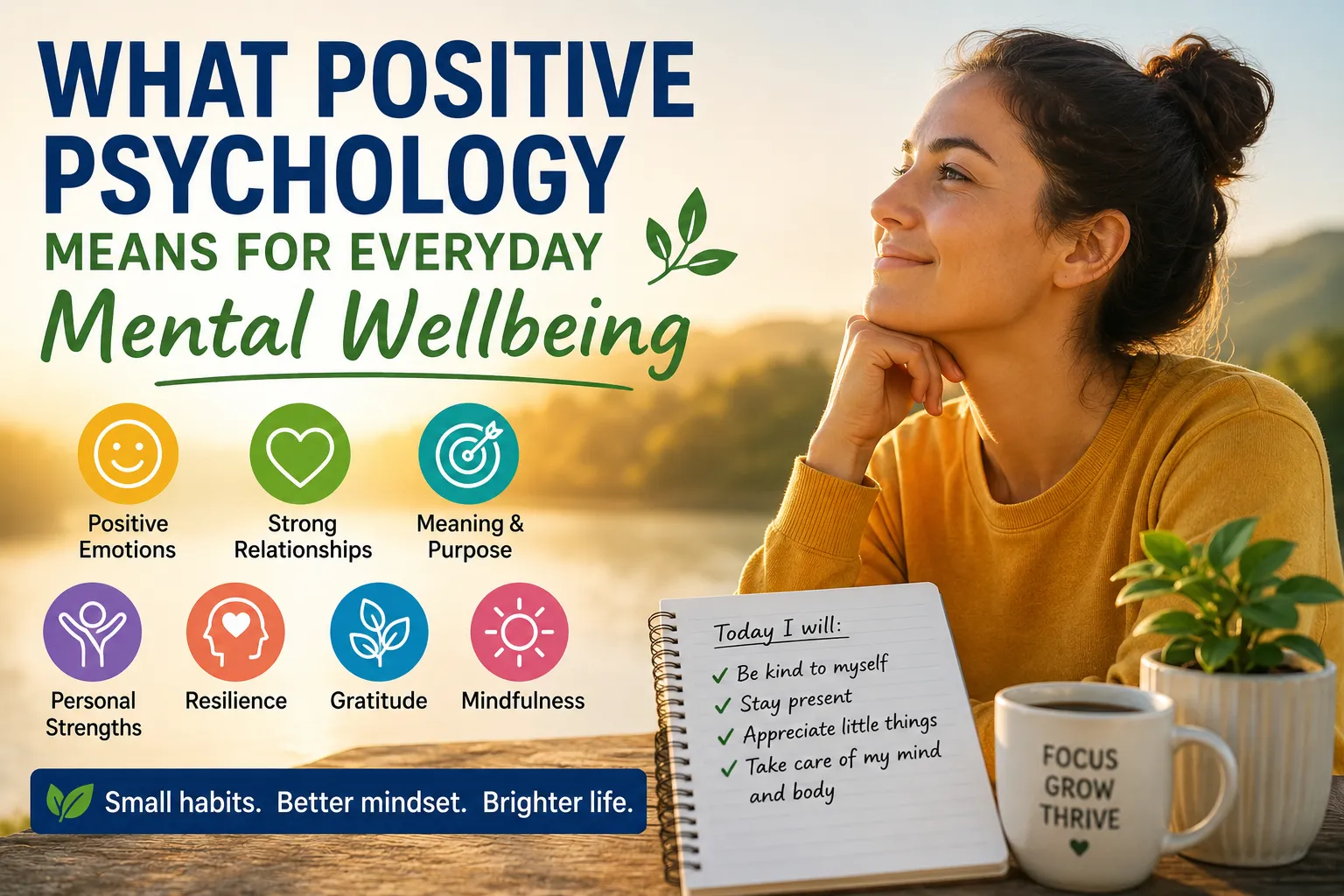

What Positive Psychology Means for Everyday Mental Wellbeing
Mental wellbeing is often discussed in terms of stress, anxiety, burnout and other challenges. But mental health is not only about avoiding problems. It also involves developing the emotional, psychological and social resources that help people function well in everyday life.
That broader perspective is at the heart of positive psychology, a field of study focused on understanding the factors that help individuals and communities thrive.
Positive psychology does not suggest that people should be happy all the time or simply ignore difficult emotions. Instead, it explores how qualities such as meaningful relationships, gratitude, purpose, resilience and a sense of accomplishment can contribute to a healthier and more satisfying life.
For everyday wellbeing, the ideas behind positive psychology can offer practical ways to think about how small experiences and habits influence mental health and fit into a broader approach to emotional well-being.
What Is Positive Psychology?
Positive psychology is the scientific study of positive aspects of human functioning and experience.
The field became particularly prominent in the late 1990s, when psychologist Martin Seligman and other researchers encouraged psychology to examine not only mental illness but also strengths, positive emotions, relationships, meaning and human flourishing.
Traditional psychology has understandably devoted substantial attention to understanding and treating psychological difficulties. Positive psychology adds another question:
What helps people live meaningful, satisfying and psychologically healthy lives?
That does not make positive psychology a replacement for conventional mental-health care. Rather, it complements research into psychological difficulties by examining factors that can support wellbeing.
Positive Psychology Is Not About Being Positive All the Time
One of the biggest misconceptions about positive psychology is that it encourages people to think positively regardless of circumstances.
That is not the goal.
People naturally experience sadness, anger, disappointment, fear and frustration. These emotions can contain useful information and are a normal part of being human.
Trying to eliminate every unpleasant emotion can actually create additional pressure.
Positive psychology is better understood as an exploration of the conditions that allow people to function well while acknowledging that difficult experiences are part of life.
A person can experience grief and still have meaningful relationships. Someone can feel anxious about an important event while also feeling hopeful about the future.
Mental wellbeing does not require constant happiness.
The Importance of Positive Emotions
Positive emotions include experiences such as joy, gratitude, interest, hope, contentment and affection.
These emotions can make everyday life more enjoyable, but their potential role may extend beyond temporary pleasure.
Positive experiences can encourage people to explore, connect with others, learn new things and approach challenges with greater flexibility.
A pleasant conversation with a friend, time spent outdoors, listening to music or enjoying a hobby may appear insignificant when considered individually.
Yet repeated positive experiences can become part of a broader pattern of psychological wellbeing.
Gratitude Can Shift Attention
Gratitude is another frequently discussed concept in positive psychology.
It involves recognizing and appreciating positive aspects of life, whether they are major events or relatively ordinary experiences.
A person might appreciate supportive relationships, good health, a peaceful morning, meaningful work or a simple meal.
Practicing gratitude does not require pretending that problems do not exist.
Instead, it can encourage people to notice positive experiences that might otherwise be overlooked.
Some people keep a gratitude journal, while others simply take a moment at the end of the day to identify something they appreciated.
The practice itself can be simple.
Meaning Can Matter More Than Happiness
Positive psychology also emphasizes meaning and purpose.
A fulfilling life is not necessarily one in which a person feels happy every day.
People often accept difficult or uncomfortable experiences because they believe those experiences serve a larger purpose.
Raising children, caring for family members, building a career, creating art, volunteering or working toward an important personal goal can involve considerable effort.
These activities may not always feel pleasant, but they can give life a sense of direction.
That distinction is important because wellbeing involves more than maximizing pleasure.
Strong Relationships Are Central to Wellbeing
Human beings are social creatures, and relationships are an important part of psychological wellbeing.
Supportive relationships can provide companionship, encouragement, emotional support and a sense of belonging.
Positive psychology therefore places considerable importance on social connections.
A strong social network does not necessarily mean having hundreds of friends or constantly being surrounded by people.
A few trustworthy relationships can be more meaningful than a large number of superficial connections.
Small actions can also strengthen relationships:
- Checking in with a friend
- Having a conversation without distractions
- Expressing appreciation
- Helping someone with a practical problem
- Spending time together
- Listening when someone needs to talk
These behaviors can contribute to a stronger sense of connection.
For a deeper look at how connection and belonging affect mental wellbeing, see this guide to loneliness and social connection.
Belonging Can Influence Mental Wellbeing
People generally benefit from feeling that they are part of something larger than themselves.
This might come from family, friendship groups, workplaces, schools, community organizations, sports teams or other communities.
A sense of belonging can reduce feelings of isolation and provide opportunities to contribute to others.
For people who feel disconnected, building belonging may take time.
Joining a community activity, volunteering or participating in a group based around a shared interest can create opportunities for new connections.
Strengths Can Be Useful Guides
Another major idea in positive psychology is the study of personal strengths.
People have different qualities that can help them navigate challenges.
Someone might be particularly curious, persistent, creative, empathetic, organized or good at bringing people together.
Identifying strengths can help people understand what they naturally do well and how those qualities can be applied more intentionally.
For example, someone who enjoys helping others might find that volunteering provides a strong sense of purpose.
Someone who is highly curious might benefit from regularly learning new skills.
The point is not to ignore weaknesses, but to recognize that strengths are also valuable psychological resources.
Resilience Does Not Mean Never Struggling
Resilience is another important concept associated with positive psychology.
It is sometimes misunderstood as the ability to remain unaffected by difficult experiences.
In reality, resilience does not mean that people never struggle.
A resilient person can experience disappointment, stress or loss and still gradually adapt, recover or find ways to move forward.
Resilience can involve several resources, including supportive relationships, flexible thinking, problem-solving skills and a sense of purpose.
These resources can vary throughout a person’s life.
Developing these abilities is also explored in the complete guide to building resilience.
Small Accomplishments Can Build Momentum
Everyday achievements can also contribute to wellbeing.
Completing a difficult task, learning something new, exercising, organizing a room or following through on a personal commitment can provide a sense of accomplishment.
These experiences do not have to be dramatic.
In fact, setting unrealistic goals can create frustration rather than wellbeing.
Smaller, achievable goals can provide regular evidence that progress is possible.
For someone trying to establish a new routine, for example, consistency may matter more than attempting a complete lifestyle transformation overnight.
The Role of “Flow”
Positive psychology has also examined a psychological state known as flow.
Flow describes a period of deep involvement in an activity where a person becomes highly focused on what they are doing.
People may experience it while playing music, writing, programming, painting, playing sports, cooking or solving challenging problems.
Activities are particularly likely to encourage flow when they are challenging enough to require attention but not so difficult that they become overwhelming.
Finding activities that encourage this type of focused engagement can make everyday life more satisfying.
Hobbies Can Support Wellbeing
Hobbies are sometimes treated as optional activities that people pursue only when they have spare time.
They can have a more meaningful role.
Creative, physical and intellectually stimulating activities provide opportunities for enjoyment, learning and accomplishment outside obligations such as work.
A hobby can also create a useful boundary between professional responsibilities and personal life.
Reading, gardening, photography, woodworking, cooking, drawing and playing an instrument are just a few examples.
The best hobby is not necessarily the most productive one. Sometimes its value comes precisely from being enjoyable for its own sake.
Physical Activity and Psychological Wellbeing
Movement is another area where physical and mental wellbeing overlap.
Regular physical activity can support overall health and is associated with benefits for mood and psychological wellbeing.
Exercise does not have to mean an intense gym session.
Walking, cycling, swimming, dancing, gardening or playing recreational sports can all provide opportunities to move.
For people who struggle to maintain exercise routines, choosing activities that are enjoyable may make consistency easier.
The goal is not necessarily to pursue an ideal fitness routine. It is to find sustainable ways of incorporating movement into everyday life.
Sleep Is Part of the Picture
Positive psychology cannot compensate for fundamental biological needs.
Sleep plays an important role in mood, concentration, emotional regulation and general functioning.
Poor sleep can make everyday challenges feel more difficult and can affect how people respond to stress.
Establishing a consistent sleep routine, creating a comfortable sleeping environment and reducing unnecessary distractions before bed can support better sleep habits.
Mental wellbeing is therefore influenced by both psychological and physical factors.
Mindfulness Can Encourage Awareness
Mindfulness involves paying attention to present experiences with greater awareness rather than automatically reacting to every thought or feeling.
Simple mindfulness practices may involve focusing on breathing, noticing physical sensations or deliberately paying attention to everyday activities.
The purpose is not necessarily to empty the mind.
Thoughts will naturally appear.
Instead, mindfulness can help people notice thoughts and emotions without immediately becoming consumed by them.
Some people incorporate short mindfulness practices into their daily routines, while others find mindfulness through activities such as walking, yoga or quiet reflection.
For a more detailed exploration, see the complete guide to mindfulness and present-moment awareness.
Self-Compassion Matters
People often speak to themselves in ways they would never speak to a friend.
A small mistake can become an internal criticism: I always mess things up. I’m not good enough. I should have known better.
Self-compassion offers a different approach.
It involves responding to personal difficulties with understanding rather than unnecessary self-judgment.
Self-compassion does not mean refusing to acknowledge mistakes.
Instead, it allows someone to recognize what went wrong while maintaining a realistic and supportive attitude toward themselves.
That can make it easier to learn from mistakes without turning every setback into a judgment about personal worth.
Optimism Has Limits—and Benefits
Optimism is often associated with positive psychology, but healthy optimism is not the same as believing that everything will always work out.
A more useful form of optimism involves maintaining the possibility that circumstances can improve while recognizing genuine difficulties.
For example, someone facing a career setback might acknowledge that the situation is disappointing while also believing that other opportunities may eventually emerge.
This kind of thinking can encourage persistence without requiring denial of reality.
Positive Psychology Can Improve Ordinary Moments
Wellbeing does not necessarily come from dramatic life changes.
Many positive-psychology concepts can be incorporated into ordinary routines.
A person might:
- Call a family member
- Take a walk outside
- Write down something they appreciate
- Work on a meaningful project
- Spend time on a favorite hobby
- Celebrate a small accomplishment
- Help someone else
- Take a break from constant digital stimulation
- Set a realistic goal for the day
None of these activities guarantees happiness.
Their potential value comes from repeated experiences that support connection, meaning, engagement and positive emotion.
Helping Others Can Support Wellbeing
Positive psychology also examines the relationship between wellbeing and prosocial behavior.
Helping another person can create a sense of connection and purpose.
This does not require major acts of charity.
It could involve helping a colleague, checking on a neighbor, volunteering, sharing knowledge or simply listening to someone who needs support.
However, helping others should not become an excuse to ignore personal needs.
Healthy wellbeing involves balancing care for others with appropriate care for oneself.
Digital Life Creates New Challenges
Modern technology can influence many of the factors associated with wellbeing.
Social media can provide connection but can also encourage comparison.
Notifications can create constant interruptions.
Endless scrolling can consume time that might otherwise be spent sleeping, exercising, socializing or pursuing meaningful activities.
Positive psychology provides one useful framework for thinking about these choices.
Instead of asking only, “How much screen time is too much?” people can also ask:
What is this technology adding to my life?
If an activity consistently leaves someone feeling connected and informed, it may serve a useful purpose. If it repeatedly leaves them distracted, isolated or dissatisfied, changing the habit may be worthwhile.
Understanding digital habits and screen time can provide another useful perspective on this relationship.
Wellbeing Is Not a Competition
Another risk is turning positive psychology itself into a source of pressure.
There is no requirement to be grateful every morning, meditate perfectly, exercise every day or maintain an optimistic outlook at all times.
Trying to optimize every aspect of life can become exhausting.
Wellbeing is not a performance metric.
People have different personalities, circumstances, responsibilities and needs. What helps one person may not work for another.
The goal is to identify practices and relationships that genuinely support a person’s life rather than following a rigid checklist.
Positive Psychology Is Not a Substitute for Mental-Health Treatment
Positive psychology can provide useful tools for everyday wellbeing, but it should not be confused with professional treatment for mental-health conditions.
Someone experiencing persistent depression, severe anxiety, thoughts of self-harm or significant difficulty functioning may need professional support.
Practices such as gratitude, exercise, social connection or mindfulness can complement appropriate care, but they should not be presented as replacements for evidence-based treatment when treatment is needed.
Seeking professional help is not a failure of positive thinking. It is one way of taking mental wellbeing seriously.
Building a More Sustainable Approach to Wellbeing
Positive psychology offers a useful reminder that mental wellbeing is not simply the absence of psychological problems.
It also involves the presence of things that make life meaningful: supportive relationships, purposeful activities, moments of enjoyment, opportunities to learn, a sense of progress and the ability to recover from setbacks.
These elements are rarely created through one dramatic change.
They are usually built through ordinary decisions repeated over time.
A meaningful conversation, an enjoyable hobby, a walk outside, a realistic goal or a moment of gratitude may seem small on its own. But a life contains thousands of such moments.
The broader lesson from positive psychology is that mental wellbeing can be strengthened not by chasing constant happiness, but by creating more opportunities for connection, meaning, engagement, accomplishment and healthy emotional experiences.
That makes positive psychology less about forcing positivity into difficult moments and more about understanding what helps people build lives they genuinely value.
Continue Reading
Similar Posts
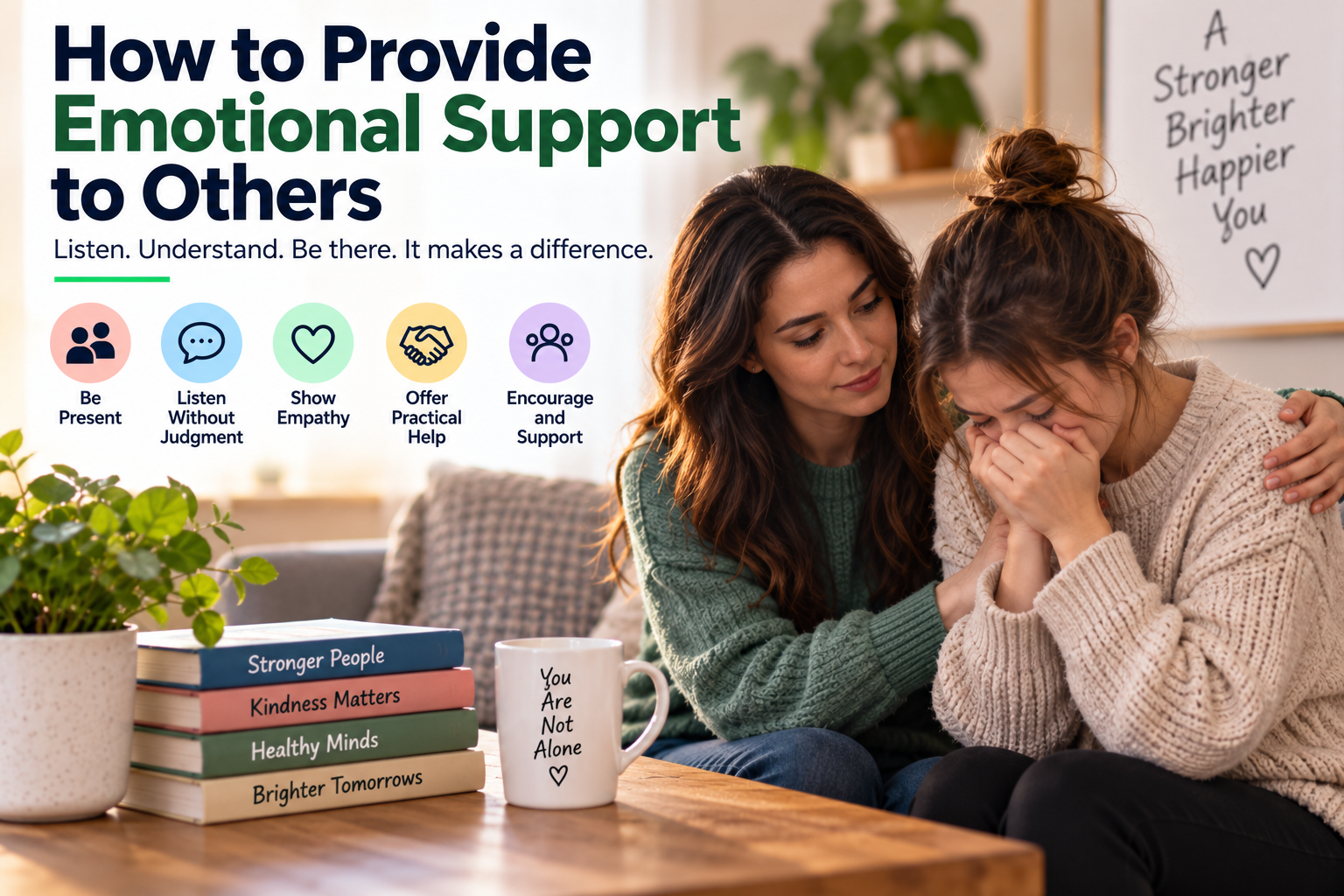
How to Provide Emotional Support to Others
Good emotional support is also about respecting boundaries. People need different kinds of help at different times. Some may want to talk, while others may need practical assistance, quiet companionship, or simply reassurance that someone cares.
Read article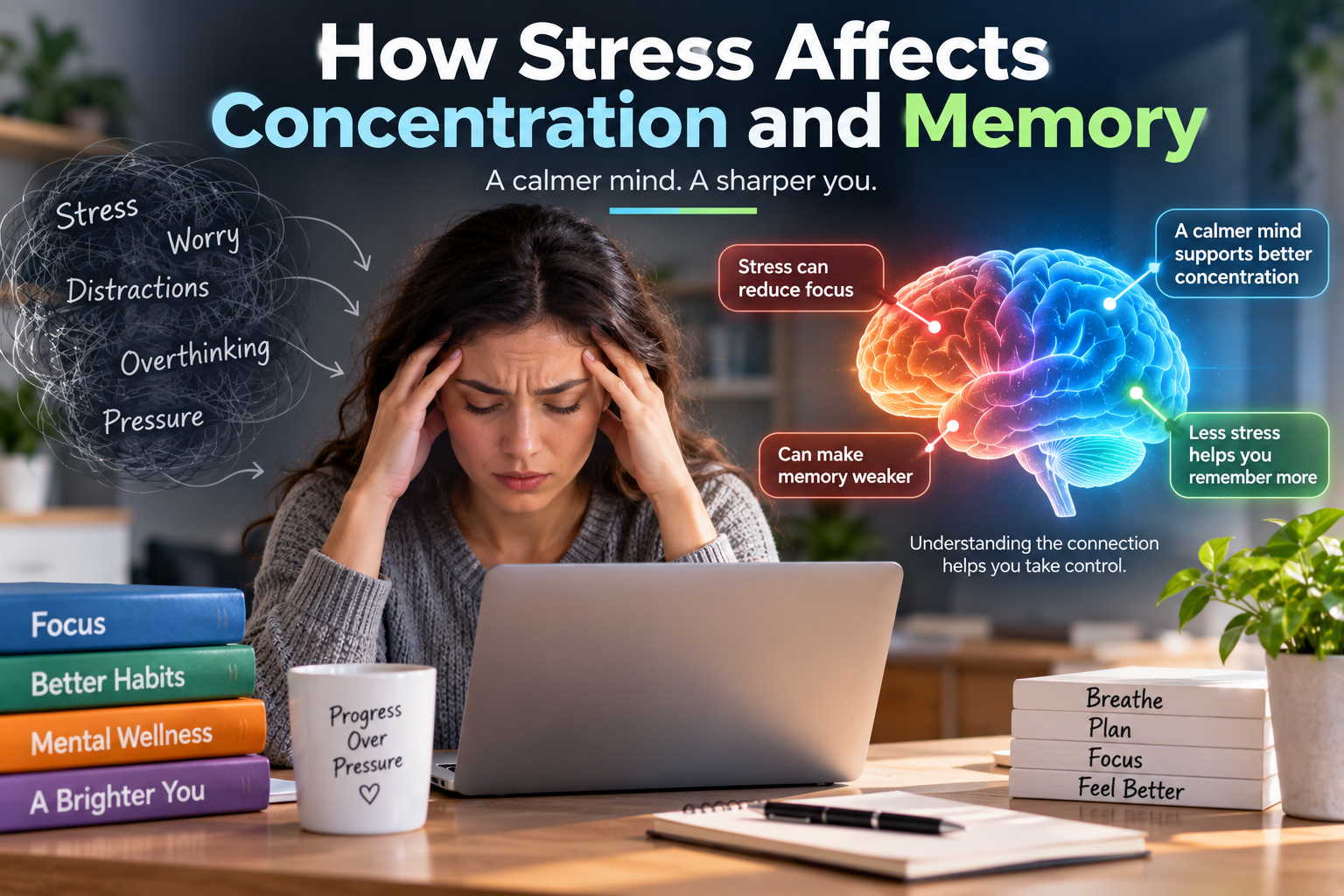
How Stress Affects Concentration and Memory
Understanding the connection between stress, concentration and memory can help explain why the mind sometimes feels less efficient during stressful periods—and why managing stress can be an important part of maintaining overall mental well-being.
Read article
When Should Someone Seek Professional Mental Health Support
Understanding **what mental wellness means** is a useful starting point. Mental wellness involves more than simply being happy or avoiding mental illness. It includes the ability to manage emotions, handle challenges, maintain relationships, make decisions, and function in everyday life.
Read article

Join 10,000+ Readers Building Healthier Habits
Get actionable wellness tips every week plus our newest articles delivered straight to your inbox.