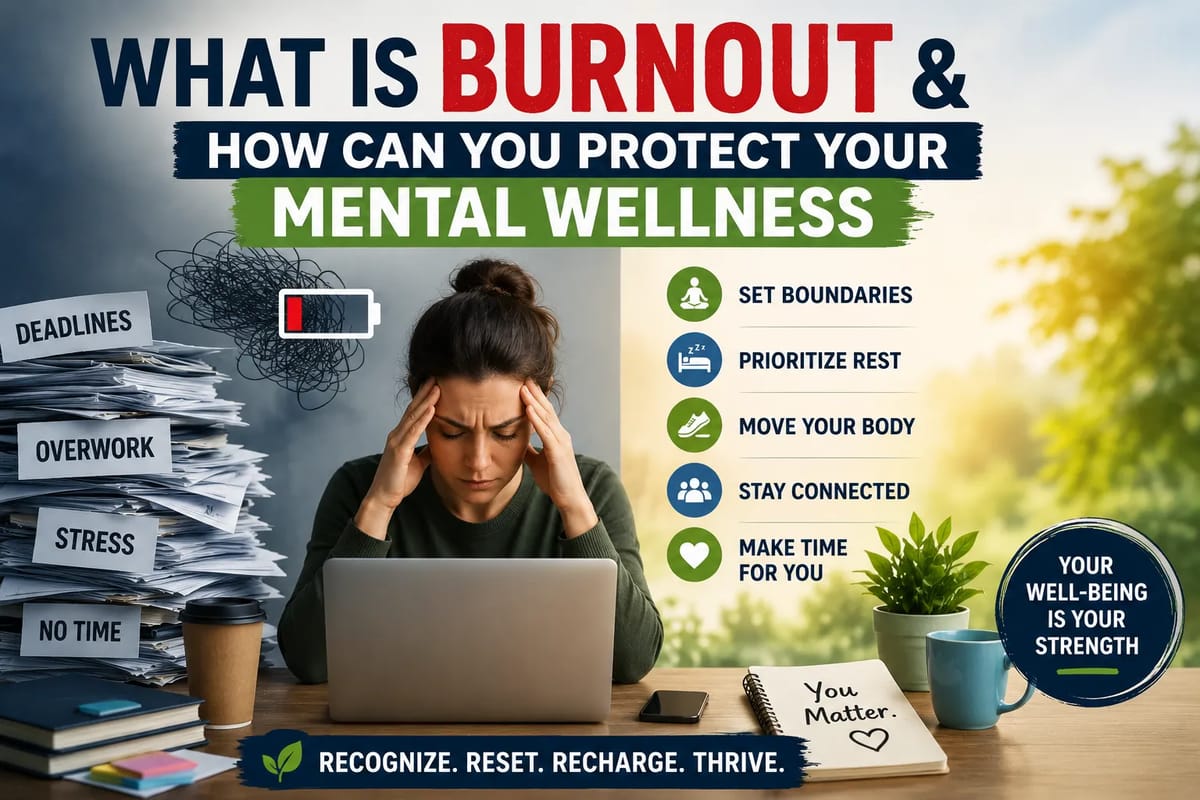

What Is Burnout and How Can You Protect Your Mental Wellness?
Modern life can demand attention from almost every direction at once. Work messages arrive after hours, family responsibilities compete with professional commitments, financial pressures can linger in the background, and digital devices make it increasingly difficult to disconnect.
Occasional stress is a normal part of life. The problem begins when demanding circumstances continue for so long that a person has little opportunity to recover.
That is where burnout can enter the picture.
Burnout is often described casually as being extremely tired or having a bad week at work. But the concept is more specific. The World Health Organization (WHO) classifies burnout in the ICD-11 as an occupational phenomenon resulting from chronic workplace stress that has not been successfully managed. It is characterized by exhaustion, increased mental distance or cynicism toward one’s job, and reduced professional efficacy. WHO does not classify burnout itself as a medical condition.
Understanding what burnout looks like—and recognizing that protecting mental wellness involves more than simply taking a day off—can help people respond before prolonged stress becomes overwhelming. For a broader understanding of emotional health and well-being, see The Complete Guide to Emotional Well-Being.
What Is Burnout?
Burnout is a state associated specifically with prolonged, poorly managed workplace stress.
According to WHO, it has three main dimensions:
-
Energy depletion or exhaustion
-
Increased mental distance from work, including negativity or cynicism
-
Reduced professional effectiveness
This definition is important because burnout is not simply another word for ordinary tiredness.
Someone can have a demanding day, feel exhausted, sleep well, and feel considerably better the following morning. Burnout tends to involve a more persistent pattern in which the relationship with work itself can change.
A person who once cared deeply about their responsibilities may begin feeling detached, frustrated, cynical, or emotionally drained.
Burnout Is Not the Same as Stress
Stress and burnout are related, but they are not identical.
Stress often involves feeling that there is too much to handle. A person may feel overwhelmed but still believe that once a difficult situation is resolved, things will improve.
Burnout can involve a deeper sense of depletion and detachment.
Someone experiencing burnout may stop feeling motivated by achievements that previously mattered to them. They may struggle to concentrate, become increasingly negative about their work, or feel that their efforts make little difference.
Long-term stress can contribute to burnout, but not everyone who experiences stress develops burnout. Understanding how chronic stress affects your body and mind can provide additional context about the relationship between prolonged stress and well-being.
Burnout Is Also Different From Depression
The distinction between burnout and depression matters.
Burnout is defined by WHO in relation to the occupational context, while depression is a mental health condition that can affect many areas of life.
The symptoms can sometimes overlap.
A person experiencing either condition might have low energy, difficulty concentrating, changes in sleep, or reduced enjoyment.
Burnout is not a medical diagnosis, and symptoms associated with burnout can also be linked to conditions such as depression.
If persistent symptoms are affecting daily life, it is therefore important not to assume that burnout is the only possible explanation.
Why Burnout Happens
Burnout rarely comes from one difficult day.
It tends to develop through an ongoing combination of demands, limited recovery, and workplace circumstances.
Potential contributors include:
-
Excessive workload
-
Long working hours
-
Lack of control over work
-
Unclear expectations
-
Workplace conflict
-
Insufficient support
-
Job insecurity
-
Poor work-life balance
-
Constant time pressure
-
Lack of recognition
-
Repeatedly changing priorities
Excessive workloads, low job control, job insecurity, discrimination, and other poor working conditions can all contribute to mental health risks at work.
This is important because burnout cannot always be solved through individual lifestyle changes alone.
Sometimes the source of the problem is the environment.
The Warning Signs of Burnout
Burnout can develop gradually, which makes early recognition difficult.
Some people may initially notice small changes:
-
Feeling unusually tired before work
-
Becoming less enthusiastic about responsibilities
-
Difficulty concentrating
-
Increasing irritability
-
Feeling emotionally detached
-
Procrastinating more often
-
Losing satisfaction in accomplishments
-
Dreading the beginning of the workday
-
Feeling ineffective despite working hard
-
Finding it difficult to switch off after work
Changes in sleep, headaches, digestive complaints, reduced energy, difficulty focusing, and increased use of food, alcohol, or other substances to cope can also occur alongside job burnout.
One symptom alone does not establish burnout. The broader pattern matters.
When Work Starts Following You Home
One common warning sign is the inability to mentally leave work behind.
A person may finish their working hours but continue thinking about unfinished tasks, emails, deadlines, meetings, or workplace conflicts throughout the evening.
Eventually, personal time stops functioning as genuine recovery time.
Smartphones and remote-work technologies can make this particularly difficult because the workplace can effectively remain accessible around the clock.
Creating some separation between work and personal life can therefore become an important part of protecting mental wellness. Establishing healthy boundaries and better limits can be particularly useful when work begins consuming personal time.
Why Recovery Matters
The human mind and body are not designed to operate indefinitely at maximum intensity.
Recovery provides an opportunity to reduce accumulated stress and restore energy.
Sleep is particularly important. Physical activity, social connection, enjoyable activities, and periods without work-related demands can also provide forms of recovery.
Adequate sleep, physical activity, relaxation activities, mindfulness, and social support can all help people cope with burnout.
Recovery is not laziness.
It is part of maintaining the capacity to function effectively over time.
Protecting Mental Wellness Starts With Recognizing Limits
One of the most useful habits is learning to recognize when demands have exceeded available resources.
That might mean noticing:
“I have agreed to more responsibilities than I can realistically complete.”
or:
“I have not had meaningful time away from work for several weeks.”
or:
“I am constantly tired even after sleeping.”
These observations can provide an opportunity to intervene before exhaustion becomes more severe.
Recognizing limits is not a sign of weakness.
It is a form of self-awareness.
Set Realistic Priorities
Not every task has the same importance.
When everything is treated as urgent, people can end up spending their energy reacting to whichever demand appears most recently.
A more sustainable approach is to identify what genuinely matters.
Ask:
-
What must be completed today?
-
What can wait?
-
What can be delegated?
-
What can be simplified?
-
What does not need to be done at all?
Setting realistic goals and determining what needs to be completed immediately versus what can wait can help reduce the pressure associated with job burnout.
Prioritization can reduce the feeling that everything is competing for attention simultaneously.
Learn to Say No Without Guilt
Constantly accepting additional responsibilities can gradually create an unsustainable workload.
Saying no does not necessarily mean refusing to help.
It can mean communicating honestly about available time and capacity.
Instead of automatically agreeing to another task, someone might say:
-
“I can take this on next week.”
-
“I can do this, but another deadline will need to move.”
-
“I don’t currently have the capacity to complete this properly.”
-
“Which of these priorities should come first?”
This turns an overwhelming workload into a conversation about priorities.
Create Boundaries Around Work
Healthy boundaries can look different for different people.
For some, that might mean avoiding work emails after a certain hour.
For others, it could mean keeping work equipment in a dedicated area rather than carrying it throughout the home.
Useful boundaries might include:
-
Establishing working hours
-
Taking a real lunch break
-
Turning off unnecessary notifications
-
Avoiding work messages during personal time
-
Taking vacation or leave when available
-
Creating a physical separation between work and rest
-
Communicating availability clearly
Boundaries are particularly important for remote workers because the physical distinction between work and home can disappear.
Take Breaks Before You Feel Completely Exhausted
A common mistake is waiting until exhaustion becomes severe before taking a break.
Short periods of recovery throughout the day can help interrupt prolonged periods of mental strain.
A break might involve:
-
Walking outside
-
Stretching
-
Getting water
-
Eating away from the workstation
-
Talking with someone
-
Sitting quietly
-
Practicing slow breathing
-
Stepping away from a screen
A break does not need to be elaborate to be useful.
The important part is temporarily disengaging from the immediate demand.
Sleep Is a Mental Wellness Foundation
Sleep is one of the most basic forms of recovery.
Persistent sleep deprivation can make concentration, emotional regulation, decision-making, and stress management more difficult.
A consistent sleep routine can help establish a more predictable recovery cycle.
Useful habits can include:
-
Keeping a relatively consistent bedtime
-
Reducing stimulating activities close to bedtime
-
Creating a comfortable sleeping environment
-
Limiting work-related activity in bed
-
Giving yourself enough time to sleep
If persistent sleep problems continue, discussing them with a healthcare professional can be appropriate.
Physical Activity Can Help Manage Stress
Movement is another useful component of mental wellness.
Physical activity can provide a break from work, support physical health, and help people manage stress.
It does not have to involve an intense gym workout.
Walking, cycling, swimming, stretching, dancing, recreational sports, and other forms of movement can all provide opportunities to become physically active.
The most sustainable activity is often the one a person can realistically enjoy and maintain.
Stay Connected With Other People
Burnout can encourage isolation.
Someone who feels exhausted may stop responding to friends, avoid social activities, or spend most of their free time recovering alone.
But social connection can be an important source of support.
Talking with a trusted friend, family member, colleague, mentor, or professional can provide perspective and reduce the sense that a problem must be handled alone.
Support does not necessarily require someone to solve the problem.
Sometimes being heard is valuable in itself.
Make Time for Activities That Are Not Productive
Modern culture can make productivity feel like the default purpose of every hour.
But not every activity needs to produce a measurable result.
Reading for pleasure, listening to music, spending time outdoors, cooking, gardening, playing a game, creating art, or simply sitting quietly can provide valuable psychological space.
Leisure is not wasted time.
Mental wellness requires more than completing tasks.
Be Careful With Constant Digital Stimulation
Phones and social media can make it difficult for the mind to experience genuine downtime.
Notifications, messages, news updates, entertainment, and workplace communications can create a continuous stream of stimulation.
That does not mean technology is inherently harmful.
The issue is whether technology is preventing meaningful periods of rest.
Practical boundaries can include:
-
Turning off nonessential notifications
-
Keeping the phone away during meals
-
Creating screen-free periods
-
Avoiding work applications during personal time
-
Taking occasional breaks from social media
Even short periods of reduced digital stimulation can create a clearer separation between responsibilities and recovery. Learn more about how digital habits and screen time affect mental wellness.
Nutrition and Mental Wellness
Food is another part of maintaining overall well-being.
Regular, balanced meals can support energy throughout the day, while relying heavily on highly processed snacks, excessive caffeine, or alcohol as coping mechanisms can become counterproductive.
A balanced eating pattern generally emphasizes a variety of foods, including vegetables, fruits, whole grains, protein sources, and healthy fats.
Nutrition is not a substitute for addressing the underlying causes of burnout, but physical well-being and mental well-being are closely connected.
Mindfulness Can Help Create Mental Space
Mindfulness involves paying attention to present experiences without immediately judging or reacting to them.
For some people, this may involve formal meditation.
For others, it could simply mean spending a few minutes focusing on breathing, sounds, physical sensations, or the activity currently being performed.
Mindfulness can be one useful approach for coping with job burnout. The Complete Guide to Mindfulness and Present-Moment Awareness provides additional information about these practices.
Mindfulness is not a magic solution.
Its value can come from creating a temporary pause between an experience and an automatic reaction.
Your Workplace May Need to Change
Individual coping strategies have limits.
If someone is experiencing burnout because of an unreasonable workload, persistent harassment, inadequate staffing, or a lack of control, telling that person to meditate more does not address the underlying problem.
Organizational interventions can directly address working conditions and psychosocial risks. These can include changes to workloads, schedules, communication, and workplace practices.
Mental wellness is therefore partly an individual responsibility and partly an organizational responsibility.
Talk to Your Manager When Appropriate
If workload or workplace expectations are contributing to burnout, speaking with a manager may help.
The conversation can be more productive when it focuses on specific problems.
Instead of simply saying “I’m overwhelmed,” it can help to explain:
-
Which tasks are consuming the most time
-
Which deadlines are conflicting
-
What resources are missing
-
Which responsibilities could be reprioritized
-
What changes might make the workload manageable
The goal is to turn an invisible problem into something that can be addressed.
Employers Have a Role in Preventing Burnout
Organizations cannot expect individual employees to solve systemic problems alone.
Employers can help protect mental wellness by addressing working conditions.
Useful organizational measures can include:
-
Reasonable workloads
-
Adequate staffing
-
Clear responsibilities
-
Flexible working arrangements where appropriate
-
Respectful workplace cultures
-
Anti-harassment policies
-
Manager training
-
Opportunities for employees to raise concerns
-
Access to appropriate mental-health support
These measures can benefit both workers and organizations.
Why Manager Behavior Matters
Managers can strongly influence the working environment.
A manager who communicates clearly, respects boundaries, recognizes effort, and notices when employees are struggling can contribute to a healthier workplace.
A manager who constantly changes priorities, sends messages at all hours, creates unrealistic deadlines, or discourages employees from taking leave can contribute to unhealthy levels of stress.
Training managers to recognize and respond appropriately to emotional distress among workers can form part of a broader approach to workplace mental wellness.
Taking Time Off Is Not Failure
Some people feel guilty about taking vacation or other available leave because they believe being constantly available demonstrates commitment.
But continuous work without meaningful recovery can eventually reduce performance.
Time away from work can provide an opportunity to recover physically and mentally.
A break also creates distance from workplace problems, which can sometimes make it easier to return with a clearer perspective.
Using available leave is therefore not necessarily a sign that someone is struggling.
It can be part of maintaining sustainable performance.
Know When Professional Support Is Appropriate
Self-care strategies can be helpful, but they are not appropriate substitutes for professional care when symptoms are persistent or severe.
Consider speaking with a healthcare or mental-health professional if you are experiencing ongoing:
-
Low mood
-
Anxiety
-
Sleep problems
-
Loss of interest in normal activities
-
Difficulty functioning
-
Severe exhaustion
-
Substance use as a coping mechanism
-
Feelings that seem increasingly difficult to manage
Burnout symptoms can overlap with other mental or physical health conditions, which is another reason professional assessment can be useful.
Do Not Ignore Major Changes in Functioning
A particularly important warning sign is when stress begins affecting ordinary life.
If someone can no longer concentrate, sleep properly, maintain relationships, perform normal responsibilities, or take care of basic needs, the situation deserves attention.
Mental wellness is not about feeling positive every day.
Everyone experiences difficult emotions.
The concern arises when distress becomes persistent, severe, or disruptive.
Build a Sustainable Definition of Success
Some people unknowingly define success as constantly being busy.
If success means responding immediately to every message, accepting every opportunity, working late every night, and never saying no, the definition itself can create unsustainable expectations.
A healthier definition might include:
-
Doing important work well
-
Having time for relationships
-
Getting adequate rest
-
Maintaining physical health
-
Having interests outside work
-
Being able to disconnect
-
Having enough flexibility to handle unexpected events
Success should leave room for being a human being.
Watch for the “Always On” Mentality
The modern workplace can create an expectation of constant availability.
Even when nobody explicitly demands it, employees may feel pressure to respond immediately because everyone else appears to be doing so.
This can create a cycle.
One person sends messages late at night. Others begin responding. Eventually, late-night communication becomes normal.
Setting reasonable communication expectations can interrupt that cycle.
Not every message needs an immediate response.
Protect Your Identity Outside Work
Work can become a major part of a person’s identity.
Professional achievement can provide purpose, confidence, and social recognition.
But when work becomes the only source of identity or satisfaction, problems at work can affect a much larger part of life.
Maintaining relationships, hobbies, interests, community connections, and personal goals can create a broader sense of identity.
Then a difficult day at work remains a difficult day at work rather than becoming a judgment about your entire life.
Burnout Prevention Is About More Than Self-Care
The phrase “self-care” is often used to describe activities such as meditation, exercise, or taking a bath.
These things can be useful, but burnout prevention needs to go further.
If the workload is consistently unreasonable, the solution cannot simply be adding relaxation activities to an already overcrowded schedule.
Effective prevention can involve:
-
Identifying the source of stress.
-
Reducing unnecessary demands.
-
Setting boundaries.
-
Improving workplace conditions.
-
Building supportive relationships.
-
Maintaining recovery time.
-
Seeking professional help when needed.
The goal is not to become better at tolerating an unsustainable situation.
It is to make the situation more sustainable.
A Simple Daily Mental Wellness Check
A short daily check-in can help people notice patterns before they become overwhelming.
Ask yourself:
Energy: How much energy do I actually have today?
Mood: How am I feeling emotionally?
Workload: Is what I am expected to do realistic?
Recovery: Have I had meaningful time away from responsibilities?
Connection: Have I spoken to someone I trust?
Boundaries: Have I allowed work to occupy all of my available time?
Physical health: Have I eaten, moved, rested, and slept adequately?
These questions are not a diagnostic test.
They are simply prompts for self-awareness.
Small Changes Can Be More Sustainable Than Dramatic Ones
Mental wellness does not require completely redesigning your life overnight.
Small adjustments can accumulate.
Going to bed a little earlier, taking a short walk, turning off work notifications after hours, declining one unnecessary commitment, eating a proper lunch, or talking honestly with someone can all create small improvements.
The key is consistency.
A sustainable routine is usually more valuable than an ambitious wellness plan that lasts for three days.
Protecting Your Capacity to Keep Going
Burnout is not simply a matter of being tired.
It is a pattern associated with chronic workplace stress that can affect energy, attitudes toward work, and professional effectiveness. WHO’s classification makes clear that burnout belongs specifically to the occupational context, while related symptoms may overlap with other mental-health conditions.
Protecting mental wellness therefore requires looking at both the individual and the environment.
Sleep, physical activity, social connection, meaningful leisure, mindfulness, and healthy boundaries can support recovery. But workload, workplace culture, management practices, job control, and organizational support matter too.
The most useful approach is not to wait until exhaustion becomes overwhelming.
Pay attention to changes in energy and motivation. Take recovery seriously. Set realistic limits. Ask for support. Address workplace problems where possible. And when persistent symptoms begin interfering with everyday life, seek professional help rather than trying to manage everything alone.
Mental wellness is not about being productive every moment. It is about having enough physical, emotional, and psychological capacity to work, rest, connect with others, and live a life that extends beyond the demands of any single responsibility.
Continue Reading
Similar Posts

How to Recognize Common Burnout Patterns
Understanding common burnout patterns can help people notice changes in their wellbeing and consider what needs to change before exhaustion becomes deeply established.
Read article
How People Recover From Difficult Experiences
Understanding how recovery works can make it easier to recognize healthy progress and identify when additional support may be useful.
Read article
How Belonging Supports Mental Wellness
Understanding the relationship between belonging and mental wellness can help explain why healthy social connections are an important part of a balanced life.
Read article

Join 10,000+ Readers Building Healthier Habits
Get actionable wellness tips every week plus our newest articles delivered straight to your inbox.