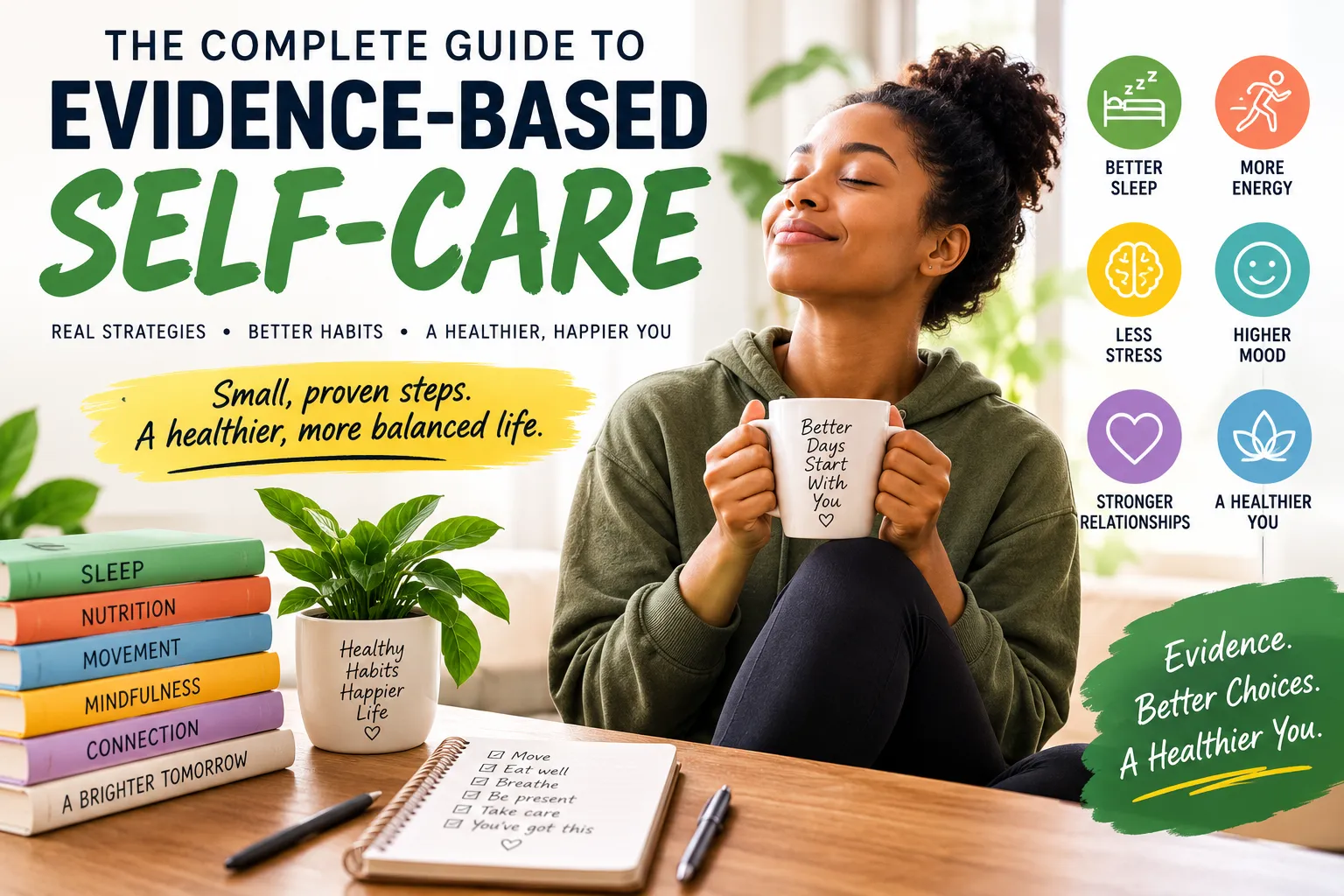

The Complete Guide to Evidence-Based Self-Care
Self-care has become one of the most popular terms in conversations about mental wellness. It can mean anything from taking a walk and getting enough sleep to setting boundaries, practicing mindfulness, spending time with friends, or simply taking a break from a demanding schedule.
But as the self-care industry grows, so does the amount of advice that is not necessarily supported by good evidence.
A scented candle may be relaxing. A spa day may feel restorative. A digital detox may help some people. But evidence-based self-care goes deeper than products, trends, or social-media routines.
It focuses on practical habits and interventions that have credible scientific support and can contribute to physical and mental well-being.
Self-care broadly refers to the ability of individuals, families, and communities to promote and maintain health, prevent disease, and cope with illness, with or without support from a health professional. It includes healthy lifestyle choices as well as evidence-based self-care interventions.
For mental wellness, that means looking beyond quick fixes and building sustainable habits around sleep, physical activity, nutrition, relationships, stress management, meaningful activities, and professional support when it is needed. These areas are all part of the broader Complete Guide to Emotional Well-Being.
What Does “Evidence-Based Self-Care” Mean?
Evidence-based self-care means choosing practices based on the best available scientific evidence rather than relying solely on popularity, personal anecdotes, or marketing claims.
It does not mean that every self-care activity needs to be backed by a large clinical trial.
Some practices are simply healthy lifestyle behaviors with broad evidence supporting their contribution to overall well-being.
Others are more specific psychological interventions that have been studied in controlled research.
The important distinction is between:
-
A practice that may feel good
-
A practice that has evidence supporting a particular health benefit
-
A treatment that should be delivered or supervised by a qualified professional
These categories should not be confused.
For example, taking a relaxing bath may help someone unwind, but it should not be presented as a treatment for depression or an anxiety disorder.
Similarly, self-guided psychological exercises can be useful, but they do not replace professional care when someone is experiencing significant or persistent mental-health symptoms.
Why Self-Care Matters for Mental Wellness
Mental health is more than the absence of mental illness.
It involves emotional, psychological, and social well-being, and self-care can help maintain mental health and support treatment and recovery.
Everyday habits can influence how people respond to stress, how well they function, how much energy they have, and how connected they feel to other people.
Self-care can also provide structure.
A consistent sleep schedule, regular movement, nutritious meals, time with supportive people, and periods of relaxation can create a stable foundation from which people can manage everyday challenges.
That foundation is particularly valuable during periods of increased stress.
Understanding what mental wellness means and why it matters can help put individual self-care practices into a broader context.
Self-Care Is Not Self-Indulgence
One common misconception is that self-care means doing whatever feels pleasant.
Sometimes it does involve enjoyable activities, but effective self-care is broader than comfort.
Going to bed instead of staying up late scrolling through social media may be self-care.
Saying no to an unrealistic commitment may be self-care.
Making a doctor’s appointment may be self-care.
Taking a difficult but necessary break from an unhealthy situation may also be self-care.
The central question is not:
“What feels good right now?”
It is:
“What supports my health and ability to function over time?”
That distinction can make self-care much more practical.
Sleep: One of the Foundations of Mental Wellness
Sleep is one of the most important areas of evidence-based self-care.
Poor sleep can affect concentration, mood, energy, and daily functioning. Making sleep a priority and maintaining a consistent schedule can support mental wellness.
For adults, general guidance recommends at least seven hours of sleep per night, although individual needs can vary.
Useful sleep habits include:
-
Going to bed and waking up at relatively consistent times
-
Keeping the bedroom dark, quiet, and comfortable
-
Limiting stimulating activities before bedtime
-
Reducing exposure to screens before sleep
-
Avoiding excessive caffeine, particularly later in the day
-
Creating a relaxing bedtime routine
Sleep hygiene is useful, but persistent insomnia may require more than lifestyle changes.
For chronic insomnia, cognitive behavioral therapy for insomnia (CBT-I) has strong evidence and is recommended in clinical guidance.
That is an important example of the difference between general self-care and evidence-based psychological treatment.
Physical Activity and Mental Health
Exercise is often discussed primarily in terms of physical fitness, but regular physical activity can also support mental well-being.
Regular exercise can be part of caring for mental health, and even smaller amounts of activity can add up.
Physical activity does not have to mean joining a gym.
It can include:
-
Walking
-
Cycling
-
Swimming
-
Dancing
-
Running
-
Recreational sports
-
Strength training
-
Hiking
-
Active household tasks
For someone who is currently inactive, starting with manageable activity can be more sustainable than immediately adopting an intense exercise program.
The goal is to build movement into everyday life.
Nutrition and Mental Wellness
Food is another component of self-care.
A balanced diet provides the energy and nutrients the body needs to function, while regular meals can help support consistent energy throughout the day.
Healthy eating can form part of self-care alongside other lifestyle practices.
A practical approach is to focus on overall dietary patterns rather than labeling individual foods as “good” or “bad.”
A balanced eating pattern can include:
-
Fruits and vegetables
-
Whole grains
-
Beans and other legumes
-
Protein-rich foods
-
Healthy sources of fats
-
Adequate fluids
Nutrition alone should not be presented as a cure for mental-health conditions.
Mental health is influenced by biological, psychological, social, and environmental factors.
Staying Hydrated
Hydration is another basic but sometimes overlooked part of looking after the body.
Staying hydrated and eating healthy, regular meals can support physical and mental health.
Individual fluid needs vary depending on factors such as climate, activity level, diet, and health conditions.
Rather than obsessing over a universal water target, pay attention to thirst and the conditions in which you are living and exercising.
Managing Stress Before It Becomes Overwhelming
Stress is a normal part of life.
Short-term stress can help people respond to challenges. Problems can arise when stress becomes persistent and difficult to manage.
Chronic stress can cause the body’s high-alert response to become harmful rather than helpful over time. Understanding how chronic stress affects the body and mind can make the distinction between temporary pressure and prolonged stress easier to recognize.
Evidence-based stress management does not mean eliminating every stressful situation.
Instead, it involves improving the way you respond to stress and addressing avoidable sources of overload.
A broader complete guide to stress management can provide additional strategies for managing everyday pressure.
Practical strategies include:
-
Prioritizing important tasks
-
Breaking large responsibilities into smaller steps
-
Taking regular breaks
-
Maintaining sleep and exercise routines
-
Making time for relaxation
-
Staying connected with supportive people
-
Asking for help when necessary
The Importance of Setting Boundaries
Not every self-care practice is an activity.
Sometimes self-care means deciding what not to do.
If a schedule has become overloaded, constantly adding wellness activities can create even more pressure.
Setting healthy boundaries may involve:
-
Declining unnecessary commitments
-
Limiting work communications outside working hours
-
Taking breaks during demanding days
-
Protecting personal time
-
Communicating realistic expectations
-
Reducing exposure to people or situations that repeatedly cause unnecessary stress
Setting goals and priorities and learning to say no can be particularly important when you begin taking on too much.
Social Connection Is Part of Self-Care
Self-care is sometimes portrayed as something people do alone.
That misses an important part of mental wellness: human connection.
Supportive relationships can contribute to psychological and physical well-being. Positive social connections and support systems can play an important role in health.
Social self-care might involve:
-
Calling a friend
-
Spending time with family
-
Joining a community group
-
Participating in a hobby
-
Volunteering
-
Meeting a neighbor
-
Talking honestly with someone you trust
Social connection does not necessarily mean having a large social circle.
A small number of supportive relationships can be highly meaningful.
A deeper look at how loneliness and social connection affect mental wellbeing can help explain why connection belongs in a comprehensive self-care plan.
What If You Feel Lonely?
Loneliness and social isolation are not exactly the same thing.
Someone can spend considerable time alone without feeling lonely, while another person can feel lonely even when surrounded by people.
If loneliness is becoming persistent, small steps can help.
Instead of trying to completely rebuild your social life, consider starting with one connection.
Send a message.
Invite someone for a walk.
Join an activity related to an existing interest.
Attend a community event.
The objective is not to force constant social interaction but to create opportunities for meaningful connection.
Persistent loneliness and isolation can have important implications for health and well-being, making social connection a worthwhile part of a broader self-care strategy.
Mindfulness and Relaxation
Mindfulness involves paying attention to present experiences rather than automatically reacting to every thought or sensation.
A complete guide to mindfulness and present-moment awareness explores how these practices can be incorporated into everyday life.
Practices can include:
-
Mindful breathing
-
Meditation
-
Body awareness
-
Mindful walking
-
Progressive muscle relaxation
-
Yoga
-
Tai chi
Relaxation and mindfulness-based practices may help people manage stress.
Mindfulness should not be treated as a magical solution.
Some people find it useful, while others may prefer different forms of relaxation.
The best approach is one that is practical, safe, and sustainable for the individual.
A Simple Breathing Exercise
A basic breathing exercise can be used as a short relaxation practice.
Try this:
-
Sit comfortably.
-
Relax your shoulders.
-
Breathe normally.
-
Pay attention to the sensation of breathing.
-
When your attention wanders, gently bring it back.
-
Continue for a few minutes.
The objective is not to stop thoughts.
It is to notice when your attention has wandered and gently return it.
If breathing exercises make you feel uncomfortable or increase distress, stop and try another relaxation strategy.
Gratitude: Useful, but Keep It Realistic
Gratitude practices are often promoted as a mental-wellness tool.
Identifying specific things you appreciate can be more practical than relying on vague positivity.
A simple practice is to write down one or two things you appreciated during the day.
They do not need to be dramatic.
It could be:
-
A good conversation
-
A meal you enjoyed
-
Completing an important task
-
Time outdoors
-
A funny moment
-
Someone helping you
However, gratitude should not become a way of dismissing genuine problems.
Being grateful for positive things and acknowledging that something is difficult can both be true.
Positive Thinking Does Not Mean Ignoring Problems
“Think positive” is common self-care advice, but forced positivity can be counterproductive.
Mental wellness is not about pretending everything is fine.
Instead, it can be useful to identify and challenge negative or unhelpful thoughts.
There is an important difference between:
“Everything will be perfect.”
and:
“This situation is difficult, but I can identify what I can control and take one step at a time.”
The second approach acknowledges reality while avoiding unnecessarily catastrophic thinking.
Self-Compassion Instead of Constant Self-Criticism
People often apply standards to themselves that they would never apply to someone they care about.
A mistake becomes evidence that they are incompetent.
A difficult day becomes a personal failure.
A missed workout becomes a reason to abandon an entire routine.
Self-compassion involves responding to personal difficulties with greater understanding rather than relentless self-criticism.
Self-compassion can be considered alongside other healthy coping skills that help people respond to stress and difficult experiences.
This does not mean avoiding responsibility.
It means correcting mistakes without turning them into attacks on your entire identity.
Hobbies and Meaningful Activities
Self-care should not be limited to activities specifically labeled “wellness.”
Doing something meaningful or enjoyable can also contribute to well-being.
Depending on the individual, that might mean:
-
Reading
-
Gardening
-
Cooking
-
Playing music
-
Art
-
Photography
-
Sports
-
Gaming
-
Spending time in nature
-
Learning a new skill
-
Working on a creative project
Making time for healthy activities that you enjoy, including reading, listening to music, spending time in nature, and low-stress hobbies, can make self-care feel more sustainable.
The key is that the activity should fit into your life rather than becoming another obligation.
Digital Self-Care
Modern life creates another self-care challenge: constant digital stimulation.
Phones and computers can be useful tools, but continuous notifications and information streams can make it difficult to switch off.
Digital habits and screen time can have an important relationship with mental wellness, particularly when technology begins interfering with other areas of daily life.
Digital self-care can involve:
-
Turning off unnecessary notifications
-
Establishing screen-free periods
-
Keeping phones away from the bed
-
Taking breaks from social media
-
Unfollowing accounts that consistently increase distress
-
Avoiding emotionally intense content before sleep
-
Creating boundaries around work messages
There is no universal amount of screen time that is “healthy” for every adult.
The more useful question is whether technology is interfering with sleep, relationships, work, physical activity, or emotional well-being.
Creating a Healthier Relationship With Social Media
Social media can provide connection, entertainment, information, and community.
It can also contribute to comparison, distraction, conflict, and information overload.
Instead of automatically deleting every social platform, consider evaluating how individual platforms affect you.
Ask:
-
How do I feel after using this platform?
-
Am I using it intentionally or automatically?
-
Does it interfere with sleep?
-
Does it take time away from relationships?
-
Am I constantly comparing myself with others?
-
Does my feed provide useful information or mostly stress?
Small changes to the accounts and content you consume may make a noticeable difference.
Nature and Time Outdoors
Spending time outdoors is another common self-care strategy.
A walk through a park, sitting outside, gardening, or simply getting away from an indoor environment can provide a break from work and screens.
Spending time in nature can be one example of an enjoyable, low-stress activity that forms part of self-care.
The important point is not to turn “nature time” into another performance metric.
A short walk outside can be enough.
Self-Care and Work
Work can become a major source of stress when boundaries disappear.
People may continue checking messages after hours, skip meals, work through breaks, or feel unable to disconnect.
Work-related self-care can involve:
-
Taking actual breaks
-
Prioritizing tasks
-
Setting reasonable working hours
-
Communicating workload concerns
-
Using vacation time
-
Avoiding unnecessary multitasking
-
Protecting sleep
-
Separating work and personal communication where possible
Sometimes the appropriate solution to work-related stress is not another relaxation technique.
It may be addressing the workload itself.
Self-Care for Parents and Caregivers
People responsible for children, older relatives, or others may find traditional self-care advice unrealistic.
“Take an hour for yourself every day” may not be possible.
A more practical approach is to look for small opportunities.
That might mean:
-
Asking someone to help with a task
-
Taking a short walk
-
Protecting regular sleep when possible
-
Eating a proper meal rather than skipping one
-
Talking with another caregiver
-
Scheduling medical appointments
-
Taking brief moments of quiet
Self-care does not have to be elaborate to be meaningful.
Self-Care on a Limited Budget
Evidence-based self-care does not require expensive products.
Many useful practices cost little or nothing.
Examples include:
-
Walking
-
Sleeping on a consistent schedule
-
Calling a friend
-
Stretching
-
Breathing exercises
-
Journaling
-
Reading
-
Spending time outdoors
-
Preparing balanced meals at home
-
Setting boundaries
-
Taking breaks
-
Practicing mindfulness
This is an important advantage of evidence-based approaches: many of the most useful habits are accessible without buying specialized products.
Beware of Wellness Marketing
The wellness industry is full of products claiming to improve mental health.
Consumers should be cautious about claims involving:
-
“Detoxing”
-
Miracle supplements
-
Instant anxiety cures
-
Guaranteed mood improvements
-
Hormone “reset” programs
-
Unproven brain-training products
-
Expensive biohacking systems
A product being marketed as “natural” does not automatically mean it is safe or effective.
Likewise, testimonials are not a substitute for scientific evidence.
When evaluating a wellness claim, ask:
What exactly is being promised, and what evidence supports that specific claim?
Supplements Are Not Automatically Harmless
People sometimes assume that supplements are safer than medications because they are sold as natural products.
That assumption can be dangerous.
Supplements can have side effects, interact with medications, and vary in quality.
If you are considering supplements for anxiety, sleep, mood, or another health concern, discuss them with a qualified healthcare professional, particularly if you take medications or have an existing health condition.
Self-care should reduce unnecessary risk, not introduce it.
When Self-Care Is Not Enough
Self-care has an important role, but it has limits.
Professional support may be appropriate when severe or distressing symptoms persist, including problems such as significant sleep disruption, changes in appetite, difficulty getting out of bed because of mood, difficulty concentrating, loss of interest in usual activities, or difficulty completing normal tasks.
Other reasons to seek professional support include:
-
Symptoms are getting worse
-
Anxiety or sadness is interfering with daily life
-
You are struggling to function at work or school
-
Relationships are being significantly affected
-
You are relying on alcohol or drugs to cope
-
You feel unable to manage the situation
-
You are experiencing thoughts of suicide or self-harm
In these circumstances, self-care should complement professional support rather than replace it.
When persistent symptoms involve low mood, loss of interest, or major changes in daily functioning, understanding depression and how it can affect everyday life can also help clarify when additional support may be appropriate.
Likewise, persistent fear, worry, or physical symptoms that interfere with daily functioning may require more than self-care strategies alone.
Evidence-Based Self-Care Can Include Professional Help
There is sometimes an unfortunate assumption that seeking therapy means someone has failed at self-care.
The opposite can be true.
Asking for help can be one of the most responsible forms of self-care.
Evidence-based psychological self-help interventions can expand access to mental-health support. Structured interventions can complement other forms of care, particularly when they have been evaluated through appropriate research.
The boundary between “self-care” and “healthcare” is therefore not always rigid.
Good self-care includes knowing when independent strategies are appropriate and when additional support is needed.
Building a Personal Self-Care Plan
A self-care plan does not need to contain twenty different habits.
Start with a few areas that are most relevant to your current life.
1. Check Your Sleep
Ask whether you are getting enough sleep and whether your schedule is reasonably consistent.
2. Look at Your Movement
Consider whether you are getting regular physical activity.
3. Assess Your Meals
Are you eating regularly and getting a reasonably balanced diet?
4. Examine Your Stress
What is currently consuming the most mental energy?
5. Check Your Relationships
Who can you talk to when life becomes difficult?
6. Make Room for Recovery
Do you have any time when you are not working, scrolling, or completing responsibilities?
7. Identify What Needs Professional Support
Are there symptoms or problems that have gone beyond what lifestyle changes can reasonably address?
This approach makes self-care more targeted.
A Simple Daily Self-Care Framework
For people who want something practical, a daily framework could look like this:
Morning
-
Wake at a reasonably consistent time.
-
Eat and hydrate.
-
Identify the day’s most important priorities.
During the day
-
Move regularly.
-
Take breaks.
-
Eat regular meals.
-
Stay connected with other people.
-
Avoid taking on more than you can realistically manage.
Evening
-
Reduce stimulating activities before bed.
-
Do something relaxing.
-
Reflect on what went well.
-
Prepare for sleep.
Weekly
-
Make time for meaningful activities.
-
Connect with someone you care about.
-
Review your workload.
-
Spend time outdoors or doing something enjoyable.
-
Check whether your current routine is actually helping.
The objective is consistency rather than perfection.
How to Know Whether Your Self-Care Is Working
Self-care should not become another source of pressure.
Instead of tracking dozens of metrics, pay attention to practical indicators.
Are you:
-
Sleeping better?
-
Feeling more energetic?
-
Handling stress more effectively?
-
Maintaining relationships?
-
Functioning better at work or school?
-
Making time for meaningful activities?
-
Recovering more effectively after difficult days?
If a self-care routine consistently makes you feel guilty because you cannot complete it, the routine may need to be simplified.
A good system should support your life rather than dominate it.
The Problem With Perfectionism in Self-Care
Social media can make self-care look like a carefully designed lifestyle.
Perfect morning routines.
Perfect meals.
Perfect workouts.
Perfect bedrooms.
Perfect meditation sessions.
Real life rarely looks like that.
There will be days when you sleep badly, eat convenience food, skip exercise, work too much, or lose patience.
That does not mean your entire self-care strategy has failed.
The healthier approach is to return to your routine without turning one difficult day into a permanent setback.
Self-Care Should Adapt to Your Circumstances
The best self-care plan is not necessarily the same for everyone.
A student may need strategies for managing academic pressure.
A parent may need help protecting recovery time.
A remote worker may need stronger boundaries between work and home.
An older adult may prioritize mobility and social connection.
Someone experiencing depression may need professional treatment alongside basic lifestyle support.
Self-care involves individuals actively managing their health while complementing, rather than replacing, formal healthcare.
That flexibility is one of the most important principles of effective self-care.
A Practical Evidence-Based Self-Care Checklist
Use this checklist as a starting point:
-
Maintain a consistent sleep schedule.
-
Aim for sufficient sleep.
-
Get regular physical activity.
-
Eat regular, balanced meals.
-
Stay adequately hydrated.
-
Make time for relaxation.
-
Practice mindfulness or breathing if you find it helpful.
-
Maintain supportive relationships.
-
Set realistic priorities.
-
Learn to say no when your workload becomes excessive.
-
Make time for meaningful activities.
-
Review how technology affects your well-being.
-
Practice self-compassion.
-
Seek professional help when symptoms persist or become difficult to manage.
You do not need to complete every item.
Choose the areas that address your biggest current needs.
The Difference Between Self-Care and Avoidance
One final distinction is particularly important.
Self-care helps you recover so that you can engage with life.
Avoidance helps you temporarily escape something while leaving the underlying problem untouched.
Taking an evening to rest after a difficult week can be healthy.
Avoiding every difficult conversation because it feels uncomfortable may not be.
Taking a break from work can be restorative.
Continuously procrastinating on important responsibilities while calling it “protecting your peace” may create more stress later.
Good self-care should generally support functioning, not gradually shrink your world.
Making Self-Care Sustainable
The most effective self-care routine is unlikely to be the most elaborate one.
It is the one you can realistically maintain.
Start small.
Improve sleep before buying another wellness product.
Walk regularly before worrying about the perfect exercise program.
Call a friend instead of assuming that social connection requires a large social calendar.
Set one meaningful boundary instead of trying to redesign your entire life overnight.
And when a problem becomes too significant for lifestyle strategies alone, seek professional support.
Evidence-based self-care is ultimately less about luxury and more about maintenance, prevention, recovery, and knowing when to ask for help.
The goal is not to create a perfect life in which stress, sadness, or difficult experiences never occur. It is to build the habits, relationships, routines, and support systems that help you respond to those experiences more effectively.
That makes self-care something far more useful than a wellness trend. It becomes an ongoing part of taking care of your health—one realistic habit at a time.
Continue Reading
Similar Posts
How to Provide Emotional Support to Others
Good emotional support is also about respecting boundaries. People need different kinds of help at different times. Some may want to talk, while others may need practical assistance, quiet companionship, or simply reassurance that someone cares.
Read article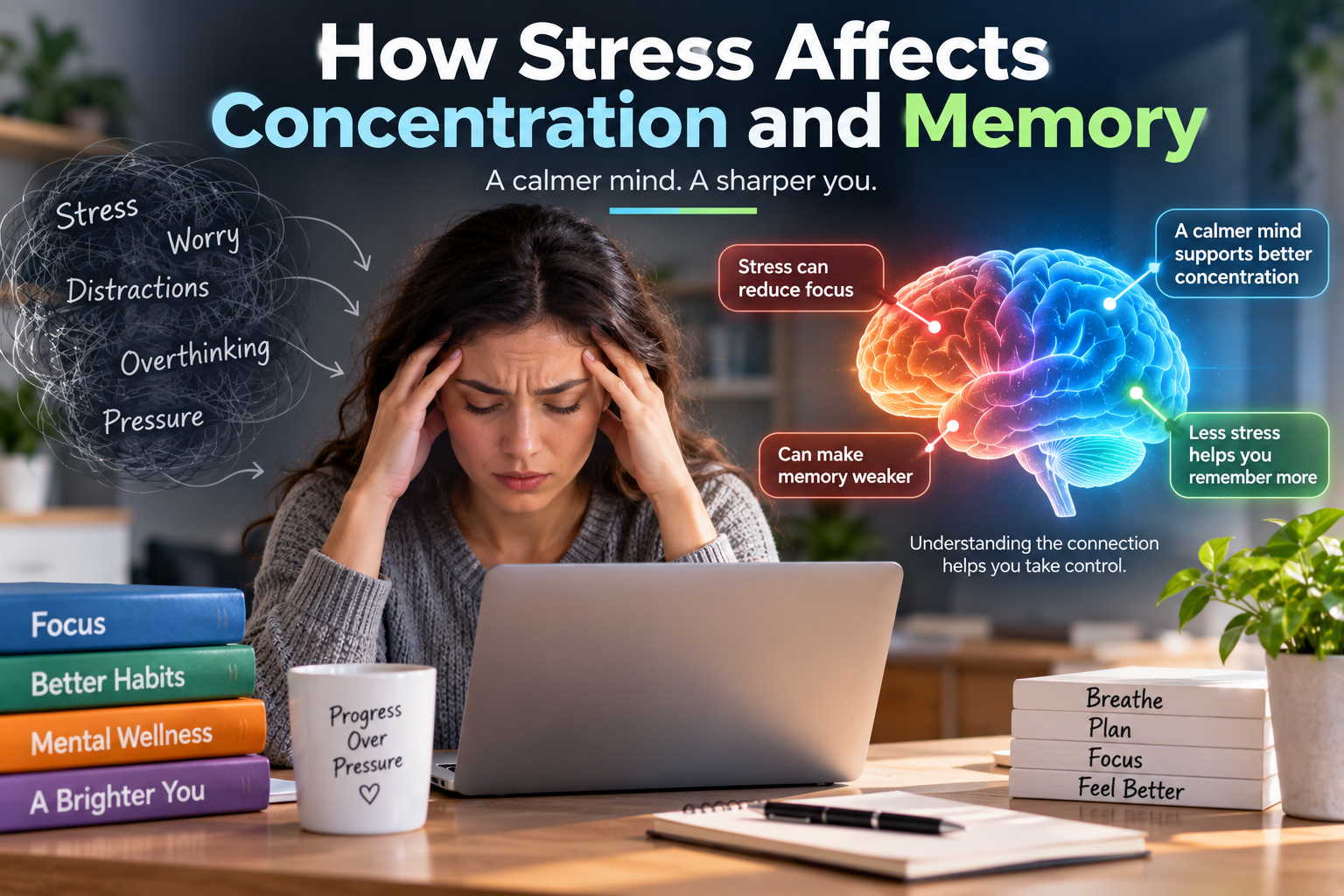
How Stress Affects Concentration and Memory
Understanding the connection between stress, concentration and memory can help explain why the mind sometimes feels less efficient during stressful periods—and why managing stress can be an important part of maintaining overall mental well-being.
Read article
When Should Someone Seek Professional Mental Health Support
Understanding **what mental wellness means** is a useful starting point. Mental wellness involves more than simply being happy or avoiding mental illness. It includes the ability to manage emotions, handle challenges, maintain relationships, make decisions, and function in everyday life.
Read article

Join 10,000+ Readers Building Healthier Habits
Get actionable wellness tips every week plus our newest articles delivered straight to your inbox.