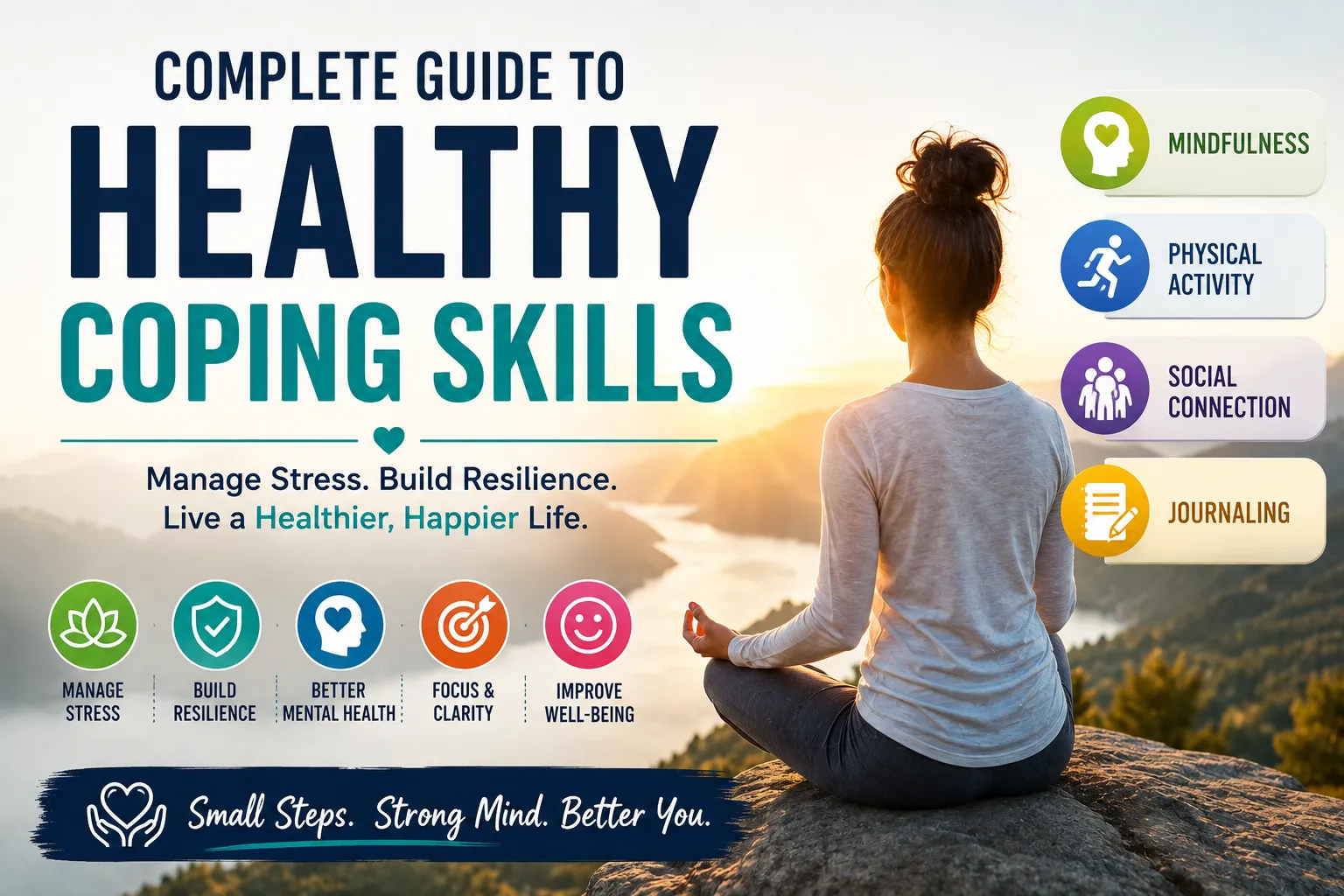

Complete Guide to Healthy Coping Skills
Life inevitably brings stress, disappointment, uncertainty and difficult emotions. A demanding job, relationship problems, financial pressure, grief, major life changes or simply an exhausting week can leave almost anyone feeling overwhelmed.
What matters is not whether difficult experiences happen, but how we respond to them.
Healthy coping skills are practical strategies that help people manage stress, difficult emotions and challenging situations without creating additional problems. They don’t make difficult circumstances disappear, and they aren’t a substitute for professional mental health care when that care is needed. Instead, they can help people regulate emotions, think more clearly, maintain routines and move through difficult periods more effectively.
For a broader understanding of emotional well-being and the many factors that influence it, see the Complete Guide to Emotional Well-Being.
This complete guide to healthy coping skills explains what coping means, the different types of coping strategies, practical techniques for stressful moments, habits that build resilience, unhealthy coping patterns to watch for and when professional support may be appropriate.
What Are Healthy Coping Skills?
Healthy coping skills are behaviors, thought processes and practical strategies that help a person manage difficult emotions, stress or challenging circumstances in constructive ways.
They can include:
- Talking to someone you trust
- Exercising
- Getting enough sleep
- Practicing relaxation techniques
- Breaking large problems into smaller steps
- Setting boundaries
- Journaling
- Spending time outdoors
- Practicing mindfulness
- Maintaining social connections
- Taking appropriate breaks
- Asking for professional help
Coping doesn’t necessarily mean feeling happy.
Sometimes the healthiest response is simply finding a way to tolerate an uncomfortable emotion while deciding what to do next.
Why Coping Skills Matter
Stress affects both the mind and body.
Stress can contribute to difficulties with concentration, sleep, appetite, relaxation and mood. Persistent stress can also worsen existing health problems and may be associated with anxiety and depression when symptoms become persistent and interfere with daily functioning.
Healthy coping strategies can help people:
- Reduce feelings of overwhelm
- Regain a sense of control
- Process difficult emotions
- Solve practical problems
- Protect relationships
- Maintain healthy routines
- Improve resilience
- Recognize when additional support is needed
The goal isn’t to eliminate every stressful experience.
It’s to develop a flexible set of responses that can be used when life becomes difficult.
Coping Is Different From Avoiding Problems
One of the most important distinctions in mental wellness is the difference between coping and avoidance.
Suppose someone is worried about an important conversation.
Healthy coping might involve:
- Acknowledging the anxiety.
- Identifying what needs to be discussed.
- Writing down key points.
- Practicing what to say.
- Having the conversation.
Avoidance might involve:
- Feeling anxious.
- Putting off the conversation.
- Distracting yourself repeatedly.
- Refusing to think about the issue.
- Allowing the problem to continue growing.
Avoidance can provide short-term relief while allowing the underlying problem to remain unresolved.
That doesn’t mean every problem must be confronted immediately. Sometimes stepping away is exactly what you need.
The key is whether the break helps you return to the situation with greater clarity or simply keeps the problem untouched.
The Two Broad Types of Coping
Coping strategies are often discussed in terms of problem-focused coping and emotion-focused coping.
Both can be useful.
Problem-Focused Coping
Problem-focused coping aims to change or manage the source of stress.
Examples include:
- Making a plan
- Asking for information
- Setting a boundary
- Solving a practical problem
- Delegating a task
- Seeking professional advice
- Changing an unhealthy situation
For example, if an overwhelming workload is causing stress, problem-focused coping could involve discussing priorities with a manager or reorganizing responsibilities.
Emotion-Focused Coping
Emotion-focused coping aims to manage the emotional response to a situation.
Examples include:
- Deep breathing
- Mindfulness
- Journaling
- Talking with a friend
- Relaxation
- Self-compassion
- Taking a restorative break
This can be especially useful when the situation itself cannot immediately be changed.
For example, you cannot always change a difficult diagnosis, bereavement or unexpected life event. But you can develop ways to manage the emotions associated with it.
Healthy Coping Skills for Immediate Stress
Some coping strategies are designed for moments when stress suddenly spikes.
1. Slow Your Breathing
Slow, controlled breathing can be a simple way to reduce physiological arousal.
Try:
- Inhale gently.
- Pause briefly.
- Exhale slowly.
- Repeat several times.
The goal isn’t to force yourself to relax.
Instead, give your attention to your breathing and allow your body an opportunity to settle.
2. Use Grounding Techniques
Grounding directs attention toward the present moment rather than allowing thoughts to spiral into past events or imagined future problems.
You might notice:
- What you can see
- What you can hear
- What you can physically feel
- The temperature around you
- Your feet touching the floor
- The sensation of your breathing
Grounding works particularly well alongside broader mindfulness practices. For a deeper look at this approach, see the Complete Guide to Mindfulness and Present-Moment Awareness.
3. Name What You’re Feeling
Instead of simply thinking:
“I feel terrible.”
Try identifying the emotion more specifically:
- “I’m frustrated.”
- “I’m worried.”
- “I’m disappointed.”
- “I’m embarrassed.”
- “I’m overwhelmed.”
- “I’m grieving.”
Putting a more precise name to an emotional experience can create psychological distance from it and make the situation easier to examine.
4. Take a Short Break
A short break can be useful when your thinking has become overloaded.
You could:
- Step outside
- Drink some water
- Stretch
- Walk around
- Sit somewhere quiet
- Listen to calming music
- Put your phone away temporarily
A break works best when it is intentional rather than an endless escape from the issue.
Healthy Coping Skills for Anxiety and Worry
Worry often creates a cycle in which the mind repeatedly attempts to solve an uncertain problem.
Some strategies can help interrupt that cycle.
Separate Problems From Predictions
Ask:
Is this a problem I can act on, or a possibility I’m imagining?
If there’s an actionable problem, identify one next step.
If there isn’t, focus on managing the uncertainty rather than repeatedly trying to predict every possible outcome.
Create a Worry List
Writing worries down can prevent them from competing for attention continuously.
Divide the list into:
| Category | Response |
|---|---|
| Something I can change | Take action |
| Something I can influence | Identify what is possible |
| Something I cannot control | Practice acceptance |
| Something uncertain | Gather appropriate information |
This approach turns an abstract mental loop into something more concrete.
Healthy Coping Skills for Anger
Anger is an emotion, not automatically a harmful behavior.
The important issue is how anger is expressed.
Healthy responses can include:
- Taking time before responding
- Identifying the trigger
- Exercising
- Writing down what happened
- Communicating assertively
- Setting boundaries
- Discussing the issue when calmer
A useful distinction is:
Feeling angry is different from acting aggressively.
If you’re too angry to communicate constructively, temporarily stepping away may be healthier than continuing the argument.
Healthy Coping Skills for Sadness
Sadness often needs space rather than immediate elimination.
Helpful strategies can include:
- Talking to someone you trust
- Maintaining basic routines
- Getting outside
- Eating regularly
- Sleeping adequately
- Gentle physical activity
- Journaling
- Allowing yourself to acknowledge the loss or disappointment
Trying to force yourself to “cheer up” immediately isn’t always useful.
Sometimes healthy coping means accepting that a difficult emotion is present without allowing it to dictate every decision.
Healthy Coping Skills for Loneliness
Loneliness can occur even when people are physically surrounded by others.
Potential strategies include:
- Contacting someone you trust
- Joining a community group
- Participating in hobbies
- Volunteering
- Attending classes or activities
- Spending meaningful time with others
- Reconnecting with someone you haven’t spoken to recently
The quality of connection often matters more than simply increasing the number of social interactions.
Building and maintaining supportive relationships is also an important part of emotional well-being. See the Healthy Relationships Guide for a broader look at communication, boundaries and trust.
Healthy Coping Skills for Grief
Grief doesn’t follow a simple timetable.
People may experience:
- Sadness
- Anger
- Confusion
- Numbness
- Guilt
- Loneliness
- Changes in sleep or appetite
Healthy coping can include:
- Staying connected to supportive people
- Maintaining basic routines
- Allowing emotions to exist without judgment
- Remembering the person or experience in meaningful ways
- Seeking professional support when grief becomes overwhelming or significantly disrupts daily life
There is no requirement to “get over” grief quickly.
Healthy Coping Skills for Work Stress
Work can become a major source of chronic stress when demands consistently exceed available time, energy or resources.
Practical strategies include:
Prioritize
Separate urgent tasks from tasks that can wait.
Break Large Projects Down
A large project can feel less overwhelming when divided into specific actions.
Set Boundaries
Not every request needs an immediate response.
Take Breaks
Short periods away from work can help restore attention.
Ask for Help
Talk to colleagues or supervisors when workload or expectations become unrealistic.
Disconnect
Where possible, create a clear boundary between working hours and personal time.
When stress becomes persistent rather than temporary, it can affect both mental and physical well-being. The Complete Guide to Stress Management provides a broader framework for managing ongoing stress.
Healthy Coping Skills for Financial Stress
Money problems can create persistent uncertainty.
Healthy coping doesn’t mean pretending financial problems don’t exist.
Instead, combine emotional regulation with practical action.
You might:
- List your current financial concerns.
- Separate urgent problems from long-term ones.
- Review income and essential expenses.
- Identify one action you can take today.
- Seek appropriate financial advice when necessary.
- Avoid making major financial decisions while highly distressed.
Sometimes the healthiest coping skill is moving from vague fear to specific information.
Healthy Coping Skills for Relationship Problems
Relationship conflict can produce strong emotional reactions.
Useful strategies include:
- Taking a pause before responding
- Listening without immediately defending yourself
- Using clear “I” statements
- Identifying the actual issue
- Setting reasonable boundaries
- Choosing an appropriate time to talk
- Accepting that some disagreements cannot be completely resolved
Healthy communication isn’t about winning every argument.
It’s about creating enough safety and clarity to understand the problem.
For more on protecting your time, energy and emotional well-being in relationships, see the Healthy Boundaries: Complete Guide to Setting Better Limits.
Healthy Coping Skills for Overwhelm
When everything feels urgent, reduce the size of the problem.
Try the one-next-step method:
Step 1
Write down everything competing for your attention.
Step 2
Identify what genuinely requires attention first.
Step 3
Choose one action.
Step 4
Complete or begin that action.
Step 5
Reassess before moving to the next task.
You don’t have to solve your entire life in one afternoon.
Sometimes reducing overwhelm starts by deciding what doesn’t need to happen today.
Exercise as a Coping Skill
Physical activity can be a useful component of stress management.
It doesn’t have to mean an intense workout.
Options include:
- Walking
- Cycling
- Swimming
- Stretching
- Dancing
- Strength training
- Recreational sports
The best activity is often one you can perform consistently and safely.
Sleep and Emotional Resilience
Sleep is closely connected to mental and physical well-being.
When you’re stressed, poor sleep can make emotional regulation more difficult, while stress can also make sleep harder.
Helpful habits may include:
- Keeping a regular sleep schedule
- Creating a relaxing bedtime routine
- Reducing stimulating activities before bed
- Keeping the bedroom comfortable
- Addressing persistent sleep difficulties with a healthcare professional
Healthy coping works best when it supports the broader habits that help people adapt to difficult circumstances.
For a deeper look at this process, see the Complete Guide to Building Resilience.
Healthy Eating as Part of Coping
Food isn’t a cure for emotional distress, but maintaining regular, balanced meals can support overall health during stressful periods.
When stressed, some people lose their appetite while others eat more than usual.
The goal isn’t perfection.
Maintaining basic nourishment can be an important part of maintaining stability during difficult periods.
Journaling for Emotional Processing
Journaling can provide a private space to organize thoughts.
You might write about:
- What happened
- What you’re feeling
- What you’re worried about
- What you can control
- What you need
- What you want to do next
You don’t need to write pages every day.
Even a few sentences can help turn an unclear emotional experience into something more concrete.
Mindfulness as a Coping Skill
Mindfulness involves paying attention to the present moment with greater awareness rather than automatically becoming absorbed in every thought or emotion.
Simple mindfulness can involve noticing:
- Breathing
- Sounds
- Physical sensations
- Thoughts
- Emotions
- Surroundings
Mindfulness isn’t about emptying the mind.
It’s about changing how you relate to what’s happening in your mind.
The Complete Guide to Mindfulness and Present-Moment Awareness explores these practices in greater depth.
Self-Compassion Is a Coping Skill
People often become more self-critical when they’re struggling.
They might think:
- “I should be handling this better.”
- “Everyone else has it together.”
- “I’m failing.”
- “I shouldn’t feel this way.”
Self-compassion offers another approach.
Try asking:
What would I say to a close friend dealing with the same situation?
Then consider whether you can offer yourself some of that same understanding.
Self-compassion isn’t the same as ignoring mistakes.
It means responding to difficulties without unnecessary cruelty toward yourself.
Social Support and Healthy Coping
Humans don’t have to handle every difficult experience alone.
A support network might include:
- Family
- Friends
- Colleagues
- Community members
- Mentors
- Healthcare professionals
- Mental health professionals
The best person to contact depends on what you’re experiencing.
Sometimes you need someone to listen.
Sometimes you need practical assistance.
Sometimes you need professional treatment.
Knowing the difference is an important coping skill in itself.
Setting Boundaries as a Coping Strategy
Boundaries define what you are willing and able to accept in relationships, work and everyday life.
Examples include:
- Saying no to unreasonable requests
- Limiting availability outside working hours
- Asking for privacy
- Reducing contact with harmful situations
- Communicating expectations clearly
Boundaries aren’t punishments.
They’re tools for protecting time, energy and well-being.
Learning to Say No
Saying yes to everything can create unnecessary stress.
A simple response can be:
“I can’t take that on right now.”
You don’t always need a long explanation.
Healthy boundaries can create space for responsibilities that genuinely matter.
Time Management as a Coping Skill
Poor organization can increase the sense that everything is happening simultaneously.
Helpful strategies include:
- Prioritizing
- Using calendars
- Creating realistic task lists
- Scheduling breaks
- Avoiding unnecessary multitasking
- Breaking projects into smaller tasks
Maintaining a daily routine can also improve a sense of control and help manage stress.
Digital Boundaries and Mental Wellness
Technology can be useful for connection and information, but constant digital exposure can also increase mental overload.
Consider:
- Turning off unnecessary notifications
- Taking regular screen breaks
- Creating phone-free periods
- Avoiding endless scrolling when distressed
- Limiting stressful news exposure
- Keeping devices away during bedtime
For a broader examination of how technology habits can influence mental wellness, see How Digital Habits and Screen Time Affect Mental Wellness.
Healthy Distraction Versus Avoidance
Distraction isn’t inherently unhealthy.
Sometimes you genuinely need to give your brain a break.
Healthy distractions can include:
- Reading
- Cooking
- Music
- Exercise
- Hobbies
- Watching something enjoyable
- Spending time with friends
The question is what happens afterward.
If the activity helps you recharge before returning to your responsibilities, it can be useful.
If it becomes a permanent way of avoiding every difficult issue, it may be worth reassessing.
Creativity as a Coping Strategy
Creative activities can provide an outlet for emotions and attention.
Examples include:
- Drawing
- Painting
- Writing
- Photography
- Music
- Gardening
- Crafting
- Cooking
You don’t need to be talented.
The value can come from the process itself.
Spending Time Outdoors
Being outdoors can provide a change of environment and an opportunity to move away from screens and daily demands.
A walk through a park, sitting outside or spending time in nature can become part of a broader stress-management routine.
It doesn’t have to be elaborate.
Humor and Enjoyment
Healthy coping doesn’t have to be serious.
Laughter, entertainment, hobbies and enjoyable experiences can provide valuable emotional relief.
It’s possible to take a difficult situation seriously while still allowing yourself moments of enjoyment.
Spiritual or Meaning-Based Coping
For some people, spirituality, faith, meditation or a sense of purpose can provide comfort and perspective.
Meaning-based coping can involve asking:
- What matters most to me?
- What values do I want to live by?
- What kind of person do I want to be during this difficult period?
- What can I learn from this experience?
These questions aren’t about pretending something painful is good.
They can help people maintain a sense of direction during uncertainty.
Healthy Coping Skills for Major Life Changes
Transitions can challenge even people who normally cope well.
Examples include:
- Starting a new job
- Moving
- Becoming a parent
- Retirement
- Divorce
- Bereavement
- Financial changes
- Graduation
- Relocation
During major transitions, maintaining basic routines can provide stability.
Focus on fundamentals:
Sleep → Food → Movement → Connection → Structure → Support
You don’t need to optimize every part of your life simultaneously.
Developing resilience can make it easier to adapt when circumstances change. The Complete Guide to Building Resilience covers the broader principles behind that process.
Common Unhealthy Coping Strategies
Some behaviors provide immediate relief but create additional problems over time.
Examples can include:
- Excessive alcohol use
- Misusing drugs or medications
- Gambling
- Compulsive spending
- Overeating or restrictive eating
- Aggressive behavior
- Social isolation
- Excessive work
- Constant avoidance
- Self-harm
These behaviors can become especially concerning when they are the primary way someone manages distress.
Why Unhealthy Coping Can Feel Effective
An unhealthy behavior can still produce short-term relief.
For example, avoidance may temporarily reduce anxiety.
Alcohol may temporarily numb difficult feelings.
Excessive scrolling may distract from uncomfortable thoughts.
Anger may temporarily create a sense of control.
The problem is that short-term relief doesn’t necessarily solve the underlying issue.
Some behaviors can also create new physical, financial, relationship or psychological problems.
Replacing Unhealthy Coping Habits
Changing a coping habit is often easier when you don’t simply remove it.
Instead, identify the function it serves.
Ask:
What does this behavior give me right now?
Perhaps it provides:
- Distraction
- Relief
- Connection
- Control
- Numbness
- Stimulation
Then find a healthier alternative that serves a similar purpose.
For example:
| Need | Potential healthier response |
|---|---|
| Distraction | Walk, music, hobby |
| Connection | Call someone |
| Relief | Breathing or relaxation |
| Control | Make a practical plan |
| Emotional release | Journal or talk |
| Stimulation | Exercise or creative activity |
Building a Personal Coping Toolkit
You don’t need dozens of techniques.
A small collection of reliable strategies can be more useful.
Create three categories:
Quick Skills
Use during a stressful moment.
- Slow breathing
- Grounding
- Short walk
- Brief pause
Daily Habits
Use to support general resilience.
- Sleep routine
- Physical activity
- Regular meals
- Social connection
Deeper Support
Use when problems persist.
- Trusted person
- Counselor
- Psychologist
- Doctor
- Support group
This creates a layered approach rather than relying on a single coping technique.
A Simple Five-Minute Coping Routine
When you’re overwhelmed, try:
Minute 1: Stop
Pause what you’re doing if possible.
Minute 2: Breathe
Take several slow breaths.
Minute 3: Notice
Identify what you’re feeling and what is happening around you.
Minute 4: Prioritize
Ask what actually needs attention right now.
Minute 5: Act
Choose one small, constructive next step.
The objective isn’t to solve everything in five minutes.
It’s to move from emotional overload toward purposeful action.
How to Know Which Coping Skill to Use
Different problems call for different strategies.
| Situation | Potential approach |
|---|---|
| Sudden anxiety | Breathing, grounding |
| Overwhelming workload | Prioritization |
| Relationship conflict | Pause and communicate |
| Loneliness | Reach out |
| Anger | Take space before responding |
| Sadness | Connection and self-compassion |
| Uncertainty | Separate facts from predictions |
| Chronic stress | Routine, boundaries and professional support |
| Practical problem | Problem-solving |
| Emotional overload | Regulation and temporary break |
There is no universal coping technique.
Flexibility is part of healthy coping.
What If a Coping Skill Doesn’t Work?
Not every technique works for everyone.
One person may find meditation helpful while another prefers walking.
Someone may benefit from journaling while another feels better talking with a friend.
If a technique isn’t helping, that doesn’t mean you have failed.
Try another approach.
Evidence-based psychological self-help can also provide structured techniques that people may use independently or with limited support.
When Coping Skills Aren’t Enough
Self-help strategies can be valuable, but they have limits.
Consider seeking professional support when:
- Distress persists for an extended period
- Symptoms interfere with work, school or relationships
- Sleep or appetite changes significantly
- Anxiety or sadness becomes difficult to manage
- You increasingly rely on substances or other harmful behaviors
- You feel unable to function normally
- Your usual coping strategies stop working
Persistent symptoms that interfere with daily functioning can indicate a mental health condition that requires access to healthcare.
Seeking professional help isn’t a sign that your coping skills have failed.
Knowing when you need additional support is itself a healthy coping skill.
Coping Skills and Mental Health Treatment
Coping skills can complement professional treatment.
Psychological interventions can be effective for a range of mental health conditions, particularly anxiety and depression, while evidence-based guided and unguided self-help approaches can form part of broader mental healthcare.
Depending on the situation, professional care may involve:
- Psychotherapy
- Medication
- Behavioral interventions
- Support groups
- Primary healthcare
- Specialist mental health services
The appropriate option depends on the individual’s circumstances.
Healthy Coping Skills for Children and Teenagers
Young people also experience stress from:
- School
- Friendships
- Family conflict
- Social pressure
- Bullying
- Major changes
- Uncertainty
Helpful coping strategies can include:
- Encouraging communication
- Maintaining routines
- Physical activity
- Creative activities
- Adequate sleep
- Supportive relationships
- Teaching emotional vocabulary
- Limiting excessive digital stimulation
Adults should also pay attention to significant changes in behavior or functioning rather than assuming every difficulty is simply a normal phase.
Healthy Coping Skills for Parents
Parents can experience stress from work, childcare, finances, relationships and the responsibility of caring for others.
One important principle is that caring for yourself isn’t selfish.
A parent who regularly ignores their own sleep, nutrition, relationships and emotional needs may eventually have fewer resources available to handle stress.
Small forms of recovery can matter:
- A short walk
- A conversation with a friend
- Quiet time
- Exercise
- Asking someone for help
- Taking a break when appropriate
Creating a Daily Mental Wellness Routine
A sustainable routine doesn’t need to be complicated.
For example:
Morning
- Wake at a consistent time
- Drink water
- Get some natural light
- Identify your priorities
During the Day
- Move regularly
- Take breaks
- Eat regular meals
- Stay connected with others
- Manage notifications
Evening
- Reduce unnecessary stimulation
- Review what went well
- Prepare for tomorrow
- Follow a consistent sleep routine
Regular routines, physical activity, social connection, healthy eating and adequate sleep can all form practical elements of stress management.
How to Make Coping Skills a Habit
A coping strategy becomes more useful when you practice it before a crisis.
For example, if you only practice slow breathing when you’re extremely anxious, it may feel unfamiliar.
Instead, practice occasionally when you’re calm.
The same principle applies to:
- Mindfulness
- Journaling
- Exercise
- Relaxation
- Emotional awareness
The goal is to build a toolkit you already know how to use when life becomes difficult.
The Role of Resilience
Resilience isn’t the ability to avoid stress or remain positive all the time.
It is the ability to adapt, recover and continue functioning despite difficult circumstances.
Resilience can be supported by:
- Social relationships
- Healthy routines
- Problem-solving skills
- Emotional awareness
- Flexibility
- Meaning and purpose
- Appropriate professional support
It is something that can develop over time rather than a personality trait that some people simply have and others don’t.
Healthy Coping Skills Frequently Asked Questions
What Are the Best Healthy Coping Skills?
There isn’t one best technique for everyone. Common approaches include physical activity, social connection, adequate sleep, structured routines, relaxation, mindfulness, problem-solving and seeking support when necessary.
What Is the Fastest Way to Calm Down?
Slow breathing, grounding and temporarily stepping away from an overwhelming situation can help some people reduce immediate stress.
Is Avoiding Stress a Healthy Coping Skill?
Temporarily stepping away from an overwhelming situation can be useful. However, consistently avoiding important problems can allow them to grow. Healthy coping usually combines emotional regulation with appropriate action.
Is Exercise a Healthy Coping Mechanism?
Yes. Regular physical activity can be part of a healthy approach to managing stress, although it should complement—not replace—other forms of care when needed.
Is Talking to Someone a Coping Skill?
Yes. Connecting with trusted people can provide emotional support, perspective and practical assistance.
Can Journaling Help With Stress?
Journaling can provide a structured way to identify thoughts, emotions, concerns and possible next steps. It can be particularly useful when thoughts feel disorganized or repetitive.
Are Coping Skills the Same as Therapy?
No. Coping skills are everyday strategies for managing stress and emotions. Therapy is professional mental healthcare delivered by a qualified provider and may be appropriate when symptoms are persistent or significantly interfere with life.
What Is an Unhealthy Coping Mechanism?
An unhealthy coping mechanism is a behavior that may provide short-term emotional relief but creates additional problems or risks over time, such as substance misuse, self-harm or persistent avoidance.
A Practical Healthy Coping Plan
When life becomes difficult, use this framework:
1. Notice
What am I feeling?
2. Name
Can I describe the emotion more specifically?
3. Assess
Is this an immediate danger, a practical problem or an uncomfortable emotion?
4. Control
What part of this situation can I influence?
5. Choose
Which coping skill fits this situation?
6. Connect
Who could support me?
7. Act
What is one constructive next step?
8. Reassess
Is this approach helping?
9. Escalate if necessary
Do I need professional support?
This framework keeps coping practical rather than turning it into another source of pressure.
Healthy Coping Is About Flexibility, Not Perfection
There will be days when you don’t meditate, exercise, journal or follow your ideal routine.
That doesn’t mean you’ve failed.
Mental wellness isn’t a checklist that must be completed perfectly every day.
Healthy coping is more about having multiple ways to respond when circumstances become difficult.
Some days you may need action.
Other days you may need rest.
Sometimes you need to solve the problem.
Sometimes you need to accept what cannot immediately be changed.
And sometimes the healthiest decision is to ask someone else for help.
Building a Coping Toolkit That Lasts
The most useful coping skills are usually the ones that can become part of ordinary life rather than emergency techniques used only when everything feels overwhelming.
A regular sleep routine, movement, meaningful relationships, healthy boundaries, emotional awareness, purposeful activities and appropriate professional support can create a foundation that makes difficult periods more manageable.
Structured psychological self-help can also provide evidence-based techniques that people can use independently or with limited support, while professional care remains important when symptoms require it.
The objective isn’t to become someone who never feels stressed, anxious, angry or sad.
Those emotions are part of being human.
The real skill is learning how to notice what you’re experiencing, respond without making the situation worse, take constructive action when possible and recognize when you shouldn’t have to handle it alone.
That is what turns coping from a collection of quick fixes into a sustainable part of mental wellness.
Continue Reading
Similar Posts
How to Provide Emotional Support to Others
Good emotional support is also about respecting boundaries. People need different kinds of help at different times. Some may want to talk, while others may need practical assistance, quiet companionship, or simply reassurance that someone cares.
Read article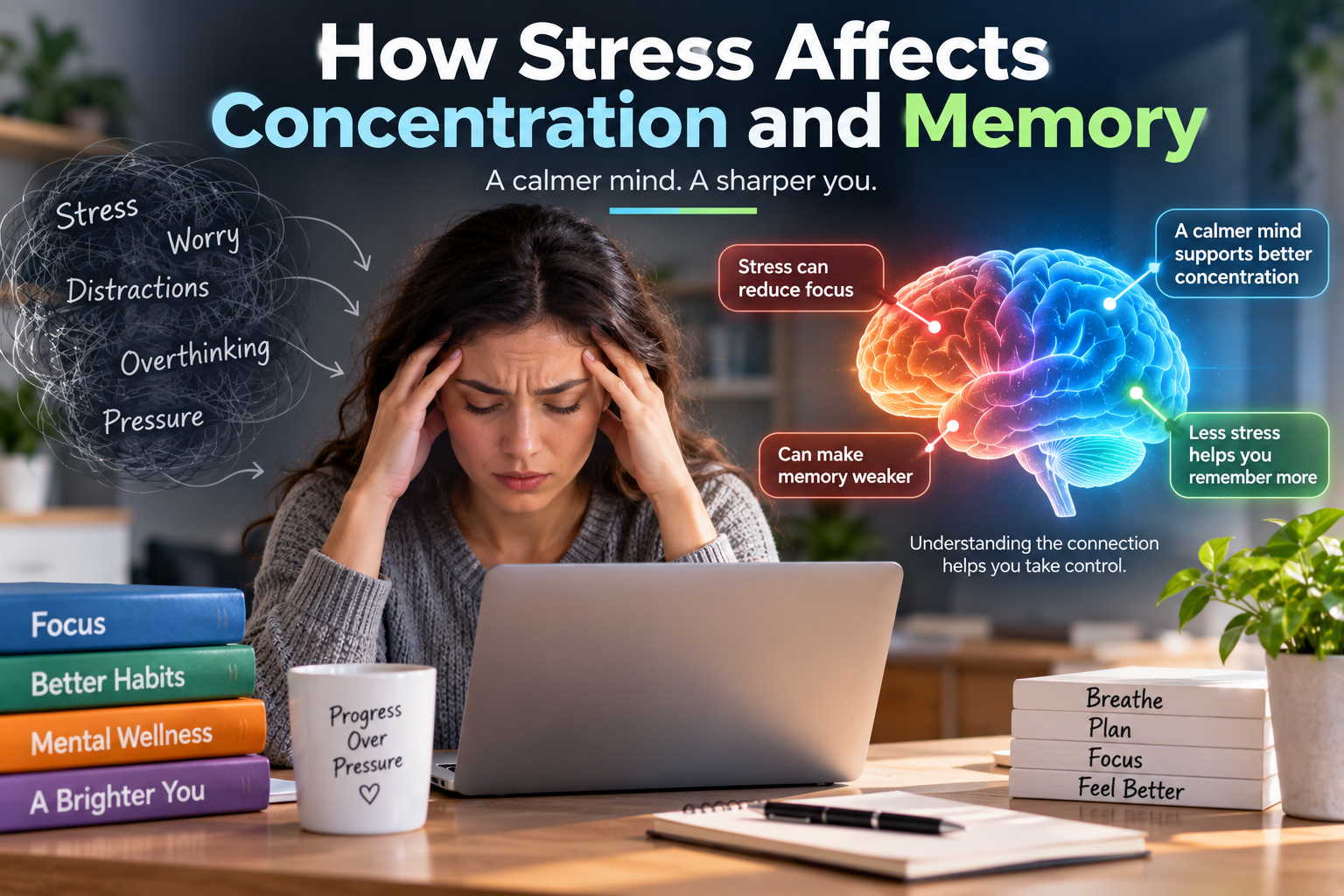
How Stress Affects Concentration and Memory
Understanding the connection between stress, concentration and memory can help explain why the mind sometimes feels less efficient during stressful periods—and why managing stress can be an important part of maintaining overall mental well-being.
Read article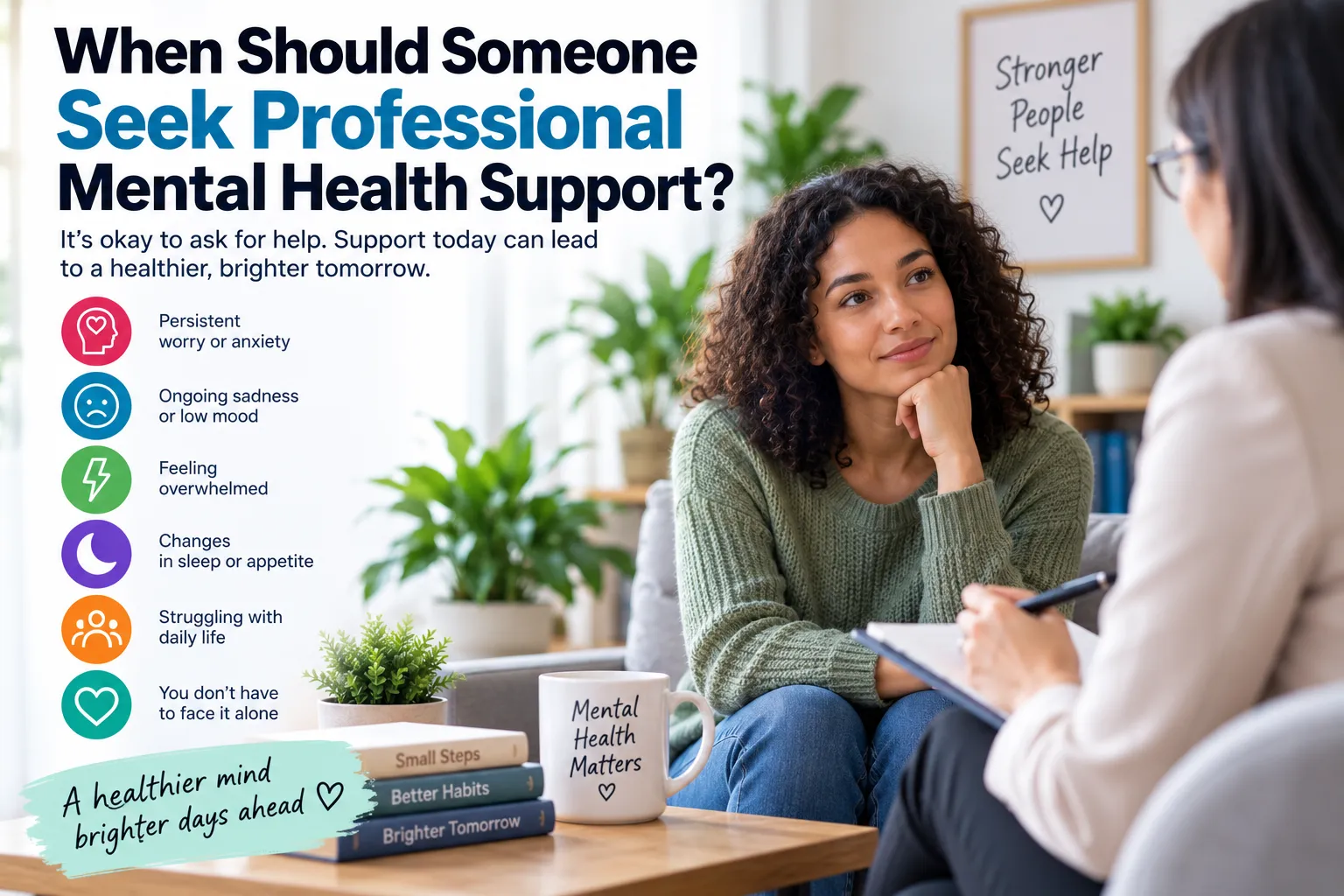
When Should Someone Seek Professional Mental Health Support
Understanding **what mental wellness means** is a useful starting point. Mental wellness involves more than simply being happy or avoiding mental illness. It includes the ability to manage emotions, handle challenges, maintain relationships, make decisions, and function in everyday life.
Read article

Join 10,000+ Readers Building Healthier Habits
Get actionable wellness tips every week plus our newest articles delivered straight to your inbox.